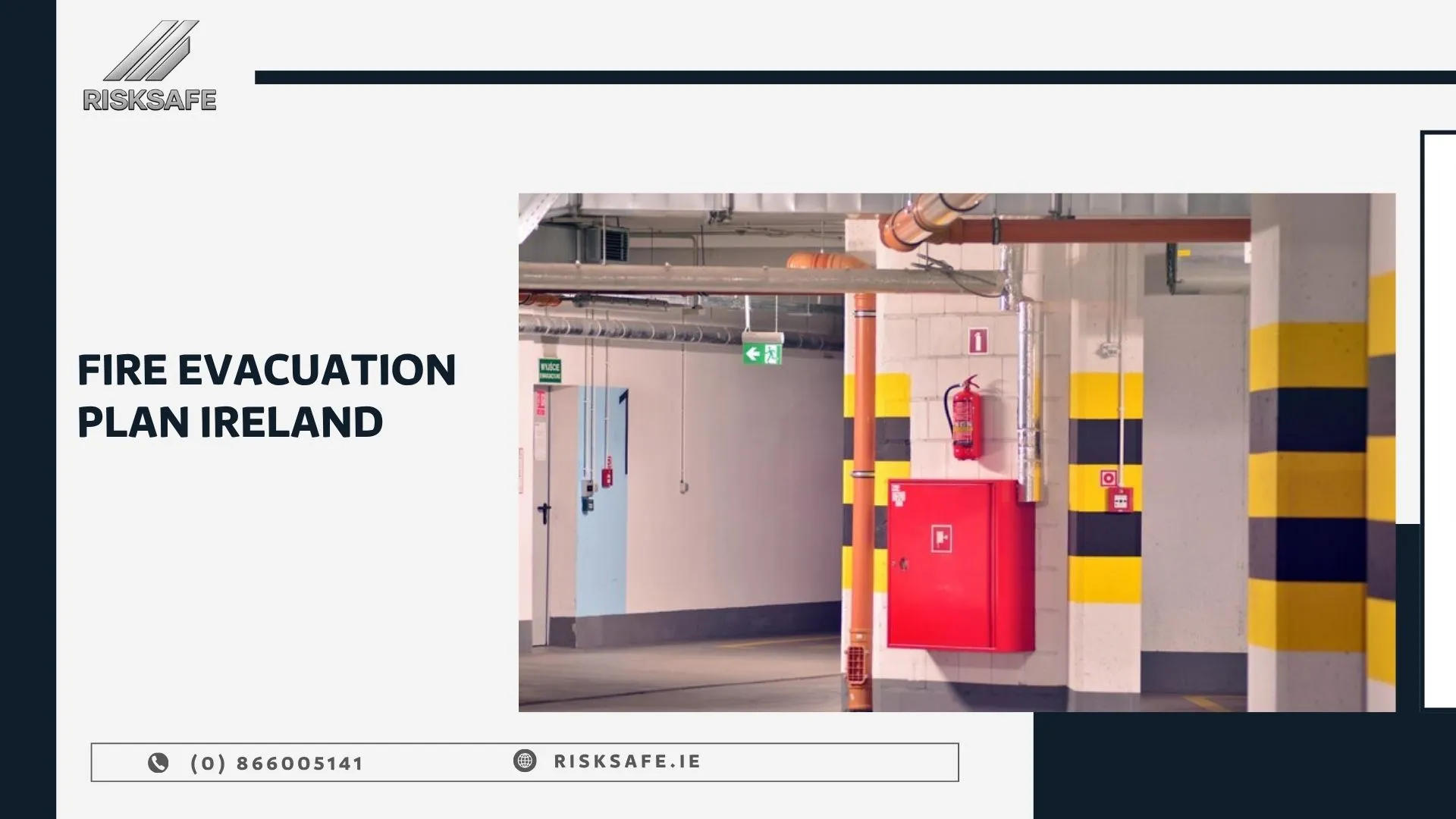
A fire evacuation plan should answer one question under pressure: how will everyone reach a place of safety quickly and without confusion? A document hidden in a folder is not enough. A useful fire evacuation plan Ireland needs clear routes, named responsibilities, arrangements for visitors, accessible evacuation, communication methods, assembly points, and a process for reviewing what changes in the building.
For employers, facilities teams, landlords, and managers in Dublin, Ireland, a fire evacuation plan Dublin should reflect the premises people actually use every day. A multi-storey office, warehouse, clinic, retail unit, or shared commercial building can each require a different approach.
This RiskSafe guide explains how to structure a workplace fire evacuation plan Dublin, what information employees need, and how to keep the plan separate from a commercial fire risk assessment.
Start With the People, Not the Template
A strong evacuation plan begins with who may be in the building when an emergency occurs.
That includes employees, visitors, contractors, delivery drivers, temporary workers, cleaners, customers, and anyone who may need assistance. HSA guidance states that evacuation arrangements must take account not only of people who can make their own escape, but also those who may require help.
This changes the way a fire emergency plan workplace Dublin should be written. Instead of saying “everyone leaves by the nearest exit,” ask whether everyone knows the routes, whether unfamiliar visitors can follow them, whether reception can account for guests, and whether assistance arrangements are realistic when staffing changes.
Map the Whole Journey to a Place of Safety
An evacuation route does not end at the final exit.
The HSA says employers should consider the entire journey to a place of safety, including outside areas, and keep escape routes clear. Doors on escape routes must be available without a key, and security arrangements must not override safe escape.
For a fire evacuation plan Ireland, walk each route from occupied areas to the final place of safety. Check corridors, stairs, final exits, external paths, gates, yards, and areas where vehicles or deliveries could create obstruction.
Dublin Fire Brigade also advises that emergency exit signage should guide occupants toward final exits, refuge areas, or assembly points, with additional signs where direction changes or sight lines are unclear.
Decide Who Does What Before the Alarm Sounds
One of the strongest parts of an emergency evacuation plan Dublin is a simple allocation of responsibility.
Different workplaces may need people to raise the alarm, call emergency services, coordinate evacuation, check designated areas where safe to do so, support visitors, assist people with additional needs, manage the assembly point, and communicate information to emergency responders.
HSA safety-management guidance says emergency plans should identify the responsibilities of key personnel, evacuation procedures, emergency-service contacts, communications arrangements, and training plans.
Avoid giving one person every role. If that person is absent, the plan can fail immediately. Identify deputies or role-based responsibilities where appropriate.
Make the Alarm Response Unambiguous
People should know what the fire alarm means and what they are expected to do.
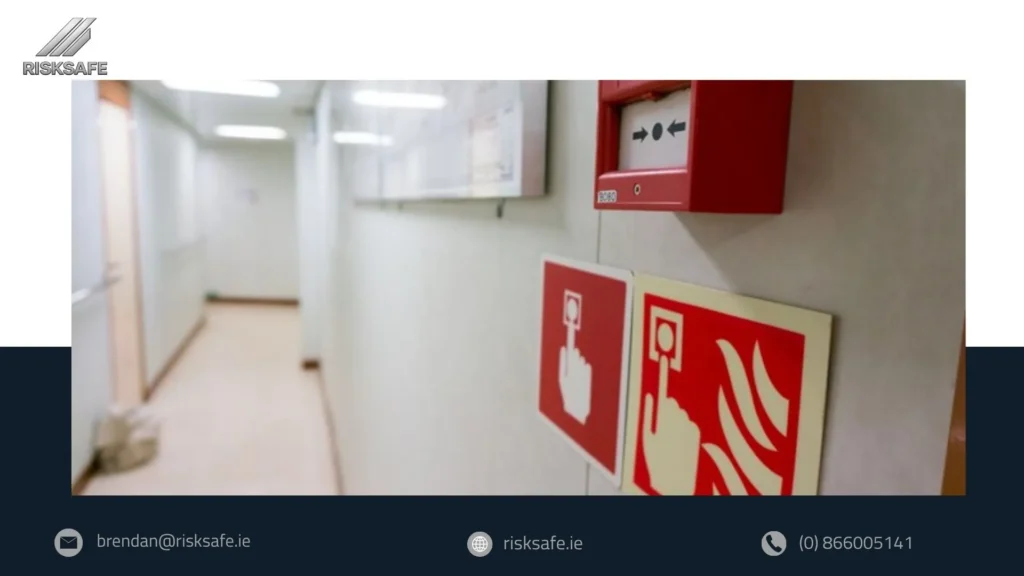
A clear fire evacuation plan Ireland workplaces can follow should explain the warning method, immediate action, evacuation routes, rules about lifts where relevant, assembly arrangements, and who contacts emergency services. Employees should not need to search for instructions once an alarm has activated.
The HSA notes that early fire detection and warning increases the time available for people to escape safely. It also requires emergency arrangements to be conveyed to occupants, particularly personnel who assist with evacuation.
Choose an Assembly Point That Does Not Create a Second Hazard
An assembly point requirements Ireland search often produces oversimplified advice. The important issue is not simply having a sign outside.
As part of a fire evacuation plan Ireland workplaces can rely on, the assembly point should be far enough from the building to avoid fire, smoke, falling debris, firefighting operations, and emergency-vehicle access. It should also be reachable through a safe route and large enough for the expected occupancy.
HSA guidance describes the destination as a place of safety, normally outside and away from the building. Dublin Fire Brigade’s signage guidance recognises assembly points as destinations that may need to be identified along escape routes.
Have a Real Method for Accounting for People
“Meet at the assembly point” is incomplete if nobody knows who should be there.
A workplace may use staff lists, visitor registers, electronic access information, department roll calls, contractor sign-in systems, or another proportionate method. The method should suit the organisation and avoid sending anyone back into the building to search for missing people.
If someone cannot be accounted for, that information should be passed to the emergency services. Employees should not re-enter a building unless authorised by the appropriate emergency personnel.
For a workplace fire evacuation plan Dublin, think carefully about hybrid staff, employees who leave for meetings, contractors moving between areas, and visitors who arrive without formal reception.
Plan for Visitors Before They Become an Emergency Problem
Visitors may not recognise the alarm tone, know the nearest exit, or understand where the assembly point is.
A fire evacuation plan Ireland workplaces use should clearly explain how visitors and contractors are included in the evacuation process. Reception, hosts, security staff, or nominated employees should know what support they are expected to provide. Contractors may need additional information if they work in plant rooms, roofs, storage areas, or other locations away from normal circulation.
HSA guidance on Safety Statements specifically recognises that contractors, temporary workers, delivery people, and other people at the workplace may need relevant safety information.
Build Inclusive Evacuation Into the Plan From the Beginning
The HSA states that the needs of disabled people must be considered when planning an evacuation strategy and identifies mobility, hearing, visual, cognitive, and age-related needs among factors that may affect escape.
A suitable plan may require individual or role-based assistance arrangements, refuge strategies where appropriate to the building, accessible communication, evacuation equipment, or staffing arrangements. The correct approach depends on the premises and people involved.
A fire evacuation plan Ireland should never assume that colleagues will “work it out” during an emergency. Assistance arrangements need to be understood beforehand and reviewed when circumstances change.
Keep Escape Routes Usable During Normal Work
Stock may migrate into corridors. Deliveries may block final exits. Furniture may narrow routes. Security changes may introduce locked doors. Contractors may temporarily obstruct stairs.
The HSA says escape routes must be kept clear, and alternative routes that are not part of normal circulation need management arrangements to ensure they remain usable.
Make route checks part of routine building management. A fire evacuation procedure Ireland should identify who can act when an exit is obstructed and how temporary work affecting escape is controlled.
Connect the Plan to the Safety Statement
HSA guidance states that a Safety Statement must include plans and procedures for emergencies or serious danger, and its safety-management guidance says emergency preparedness should dovetail with the Safety Statement.
That means changes to occupancy, building layout, staffing, work processes, or fire precautions may require both the evacuation arrangements and related safety documentation to be reviewed.
Know When the Plan Needs More Than an Edit
Sometimes a weak evacuation plan is a symptom of a wider fire-safety problem.
If escape routes are unsuitable, doors cannot be opened safely, warning arrangements are inadequate, emergency lighting is poor, or the building layout no longer reflects the original fire precautions, rewriting instructions alone will not fix the underlying issue.
RiskSafe’s Fire Risk Assessments Dublin is the appropriate commercial service page for organisations seeking a broader review of fire hazards and existing controls.
Connect Evacuation Planning With Wider Workplace Management
RiskSafe’s Health and Safety Audits Dublin provides a separate route for organisations seeking a wider review of workplace safety management.
Facilities teams managing other building risks can use Water Risk Assessments Dublin for water-system and Legionella-related risks.
Where work involves lifting, carrying, pushing, or pulling and training is appropriate, RiskSafe also provides Manual Handling Training Dublin.
Fire Evacuation Plan Ireland: A Practical Content Checklist
A useful plan should clearly cover:
- how the alarm is raised;
- what the alarm signal means;
- immediate actions employees should take;
- primary and alternative escape routes;
- final exits and the route to a place of safety;
- the assembly point;
- responsibilities of wardens or other nominated personnel;
- arrangements for visitors and contractors;
- arrangements for people who may need assistance;
- how emergency services are contacted;
- how people are accounted for;
- what happens if someone is missing;
- restrictions on re-entry;
- communication methods during and after evacuation;
- arrangements for different shifts or occupancy patterns;
- how changes to the workplace trigger review.
The HSA recommends that emergency plans be tested, reviewed, and revised when necessary, particularly after emergencies or significant experience that shows the arrangements need improvement.
Frequently Asked Questions About Fire Evacuation Plans in Ireland
-
Does every workplace need a fire evacuation plan?
Irish workplace law requires employers to prepare and revise adequate plans and procedures for emergencies and serious and imminent danger. HSA fire guidance says workplaces should have an escape plan identifying the actions employees and others should take in a fire.
-
What should a workplace fire evacuation plan Dublin include?
It should cover warning, escape routes, responsibilities, people needing assistance, visitors, emergency contacts, assembly, accounting for people, and communication. The detail should match the building and risk.
-
Can the assembly point be directly outside the entrance?
Not automatically. It should be a place of safety away from the building and should not interfere with emergency access. The actual location needs to suit the site.
-
Should visitors be included in the plan?
Yes. The employer must consider people other than employees who may be affected, and evacuation arrangements should address unfamiliar occupants.
-
What happens if an employee needs assistance to evacuate?
Their needs should be considered in advance as part of the evacuation strategy. The arrangement should be practical for that person, building, and staffing situation.
-
When should a fire evacuation plan be updated?
Review it after relevant building, staffing, occupancy, or process changes and where testing, an incident, or practical experience shows that the existing arrangements may no longer be adequate.
Write the Plan for the Worst Ten Minutes, Not the Quietest Day
A useful fire evacuation plan Ireland is not judged by how polished the document looks. It is judged by whether people can understand it quickly, escape by safe routes, receive assistance where needed, assemble safely, and provide accurate information when an emergency occurs.
For businesses in Dublin, Ireland, keep the fire evacuation plan Dublin specific to the premises. Walk the routes, assign realistic responsibilities, include visitors and contractors, plan accessible escape, protect the assembly area, and revise the plan when conditions change.
RiskSafe supports organisations through Fire Risk Assessments Dublin, where evacuation arrangements can be considered alongside the wider fire-safety picture without turning this informational article into a competing service page.