A workplace emergency can happen without warning. A cut, fall, burn, sudden illness or serious medical event can quickly test whether a business has suitable arrangements in place. Understanding workplace first aid requirements Ireland is therefore about more than buying a first aid box. Employers need to consider workplace risks, employee numbers, trained first aiders, equipment, records and emergency access.
For employers in Dublin, Ireland, practical arrangements should reflect the real workplace. A small office will not necessarily need the same provision as a warehouse or workshop.
This RiskSafe guide explains workplace first aid requirements Ireland, the role of risk assessment and first aider requirements Dublin without turning first aid into a substitute for wider risk prevention.
Why Workplace First Aid Is More Than a Box on the Wall
The Health and Safety Authority states that occupational first aid is covered by specific requirements under the Safety, Health and Welfare at Work (General Application) Regulations 2007. Employers must provide first aid equipment where working conditions require it, and trained occupational first aiders may be required depending on workplace size and hazards. Read the HSA First Aid guidance.
That risk-based approach matters. First aid requirements workplace Ireland depend on the environment, activities, workforce, layout and potential consequences if someone becomes injured or ill.
For workplace first aid Dublin planning, employers should also consider lone working, contractors, visitors, different floors, hybrid attendance and access to emergency medical help.
Start With a Workplace Risk Assessment
The best way to approach workplace first aid requirements Ireland is to begin with the workplace risk assessment.
Review employee numbers, likely injuries, workplace size, shift patterns, previous incidents, visitors, remote workers, special hazards and distance from suitable medical facilities. HSA guidance makes clear that decisions about occupational first aiders should consider all relevant factors, not employee numbers alone.
The assessment should answer what could happen, who may need help, what equipment is needed and whether competent cover is available throughout working hours.
How Many First Aiders Are Required Ireland Workplaces?
A common question around workplace first aid requirements Ireland is how many first aiders are required Ireland employers to have?
There is no single number for every workplace. The HSA publishes indicative guidance based on workplace type and the maximum number of employees present at one time.
For factories, construction sites, surface mines and quarries, workplaces with up to 49 employees may need one occupational first aider where the Safety Statement risk assessment shows it necessary. The guidance indicates a minimum of one for 50–149 employees and two for 150–299.
For “other workplaces”, including many office and commercial settings, up to 99 employees may require one first aider where the risk assessment shows it necessary. The indicative figure is one for 100–399 employees and two for 400–699.
These figures are guidance; Dublin businesses should plan cover.
One trained person on paper is not enough if that person is regularly absent.
What If the First Aider Is Absent?
Where an occupational first aider is temporarily absent in exceptional circumstances, HSA guidance allows an employer to designate a person to take charge of an injured or ill person until medical assistance is obtained. This should not become a routine substitute for suitable first aid coverage.
A practical workplace first aid Dublin review should ask who covers annual leave, who is available on each shift, whether all areas are reasonably covered and whether employees know who to contact.
What Training Should an Occupational First Aider Have?
The HSA identifies the PHECC First Aid Response, or FAR, standard as the recognised minimum standard for occupational first aid training. Certain higher PHECC qualifications are also recognised.
Employers should not assume that any short first aid course automatically makes someone an occupational first aider for workplace purposes.
The HSA states that occupational first aid certification is valid for two years, after which recertification is required. Employers should maintain a record showing the first aider’s name, certificate date and renewal date. See the HSA First Aid FAQs.
What Should a Workplace First Aid Kit Contain?
Suitable equipment is another core part of workplace first aid requirements Ireland.
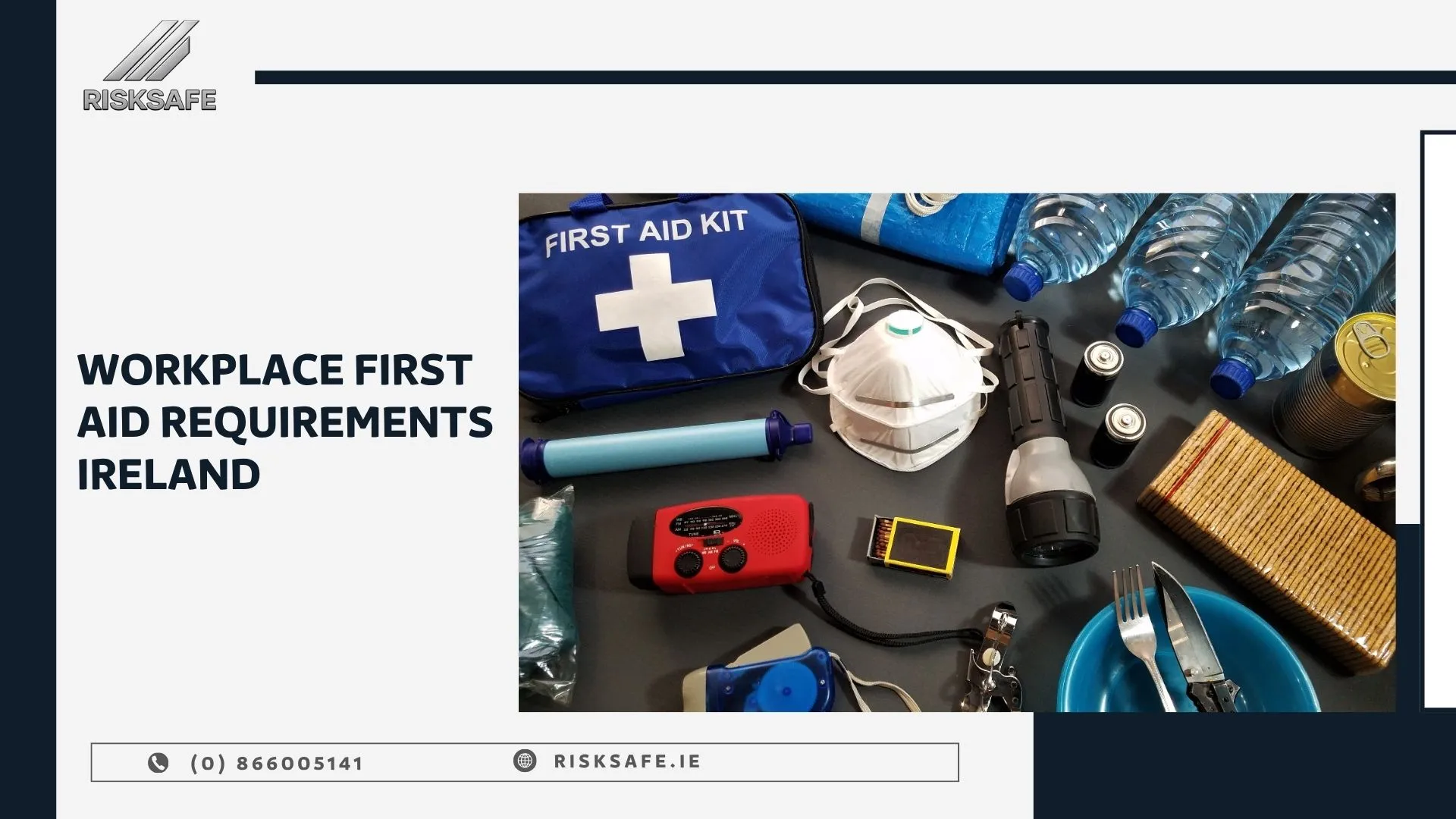
The HSA provides recommended minimum contents for first aid boxes and travel kits based on workforce numbers. These include items such as adhesive plasters, sterile eye pads, triangular bandages, sterile wound dressings, disinfectant wipes, gloves, paramedic shears, a pocket face mask and crepe bandages.
The standard list is a starting point. Actual quantities and additional items should reflect the risk assessment.
A useful workplace first aid requirements Dublin check is whether kits are clearly identified, easy to access, appropriate to the hazards, checked regularly and restocked after use.
Routine painkillers should not simply be added to the kit. HSA guidance states that first aid does not generally cover administration of drugs or medications.
Does Every Dublin Workplace Need an AED or First Aid Room?
An AED is not generally mandatory for employers, although the HSA describes having a properly maintained AED as good practice. AED use forms part of FAR training.
A dedicated first aid room is not required in every workplace. The HSA says one or more rooms are required where the Safety Statement risk assessment shows they are necessary, considering premises size, activity, accident frequency, special hazards and distance from an appropriate medical facility.
First Aid Records Employers Should Keep
Good first aid employer responsibilities Ireland extend beyond equipment.
The HSA states that occupational first aider names and the location of first aid rooms, equipment and facilities should be recorded in the Safety Statement. Training and recertification records should be kept, while records of cases treated should be stored securely and confidentially.
Useful records include first aider coverage, certificate expiry dates, kit checks and treatment records.
Repeated injuries may reveal a hazard that should be controlled at source.
Workplace First Aid Requirements Dublin Offices Should Review
Offices are often described as low risk, but low risk does not mean no risk. Workplace first aid requirements Dublin offices may still need to consider slips, trips, cuts, burns, manual handling injuries, sudden illness and medical emergencies involving employees or visitors.
The arrangement should reflect how the office actually operates. If teams use several floors or attendance varies by day, coverage should be checked against real staffing.
RiskSafe’s Health and Safety Audits Dublin can review first aid arrangements alongside Safety Statements, risk assessments, emergency procedures, training records and wider workplace controls. That keeps the commercial service focused on the broader safety management system rather than duplicating the information in this article.
Connect First Aid With Wider Workplace Risk Control
First aid is a response measure. It does not replace prevention.
If injuries involve lifting, carrying, pushing or pulling, employers should review the task and controls. Where training is appropriate, RiskSafe provides Manual Handling Training Dublin for workplace teams.
If emergency planning identifies fire-related weaknesses, RiskSafe’s Fire Risk Assessments Dublin can review fire hazards, escape arrangements and existing controls.
For property and facilities teams, RiskSafe’s Water Risk Assessments Dublin support the review of water-system risks and relevant Legionella-related controls.
Workplace First Aid Checklist for Dublin Employers
Use this checklist when reviewing workplace first aid requirements Ireland:
- Has first aid provision been considered in the workplace risk assessment?
- Are appropriately trained first aiders available when required?
- Is holiday, sickness and shift cover considered?
- Do employees know who the first aiders are?
- Are certificate renewal dates tracked?
- Are first aid kits accessible and correctly stocked?
- Are kits inspected and replenished after use?
- Have special hazards been considered?
- Is a first aid room required?
- If an AED is provided, is it maintained and accessible?
- Are treatment and training records kept securely?
- Does the Safety Statement identify first aid arrangements?
- Are arrangements reviewed after workplace changes or incidents?
- Have lone, mobile or remote workers been considered?
- Do employees know how to obtain emergency medical assistance?
For detailed official information, refer to the HSA’s Guidelines on First-Aid at Places of Work.
Common First Aid Mistakes Dublin Employers Should Avoid
Common weaknesses include relying on one first aider with no cover, expired certificates, poorly located kits and failing to review arrangements after workplace changes. First aid treats the immediate consequence; risk management should address the cause of repeated injuries.
A workplace health and safety audit in Dublin can help review whether first aid arrangements fit into the wider safety system.
Frequently Asked Questions About Workplace First Aid Requirements Ireland
-
Is a first aider legally required in every workplace in Ireland?
Not automatically. The need depends on the workplace risk assessment, employee numbers, workplace type and other relevant factors. HSA guidance provides indicative numbers.
-
How many first aiders are required Ireland workplaces?
There is no universal figure. Employers should consider HSA guidance together with hazards, staffing, absence cover, shifts and workplace layout.
-
What are the main first aid requirements workplace Ireland employers should review?
They should review equipment, trained first aiders where required, availability, first aid rooms where necessary, records, communication and the Safety Statement risk assessment.
-
Do first aid certificates expire?
Yes. HSA guidance states that occupational first aid certification is valid for two years before recertification is required.
-
Are workplace first aid requirements Dublin different from the rest of Ireland?
The national legal framework applies across Ireland. Dublin businesses still need arrangements tailored to their workforce, hazards, premises and access to emergency assistance.
-
Does every employer need an AED?
No. The HSA states that an AED is not generally mandatory, although providing a properly maintained one is considered good practice.
Make First Aid Part of a Stronger Safety System
Understanding workplace first aid requirements Ireland helps employers move beyond simply owning a first aid box. The real question is whether suitable help, equipment and arrangements would be available when someone needs them.
For Dublin businesses, assess real risks, provide suitable equipment, maintain trained coverage where required and review arrangements when the workplace changes.
RiskSafe supports organisations across Dublin, Ireland with practical workplace safety services. If you want first aid arrangements reviewed as part of a wider safety management check, explore RiskSafe’s Health and Safety Audits Dublin. The audit can consider first aid alongside documentation, emergency planning, training and broader risk controls without replacing official HSA guidance or specialist medical training.