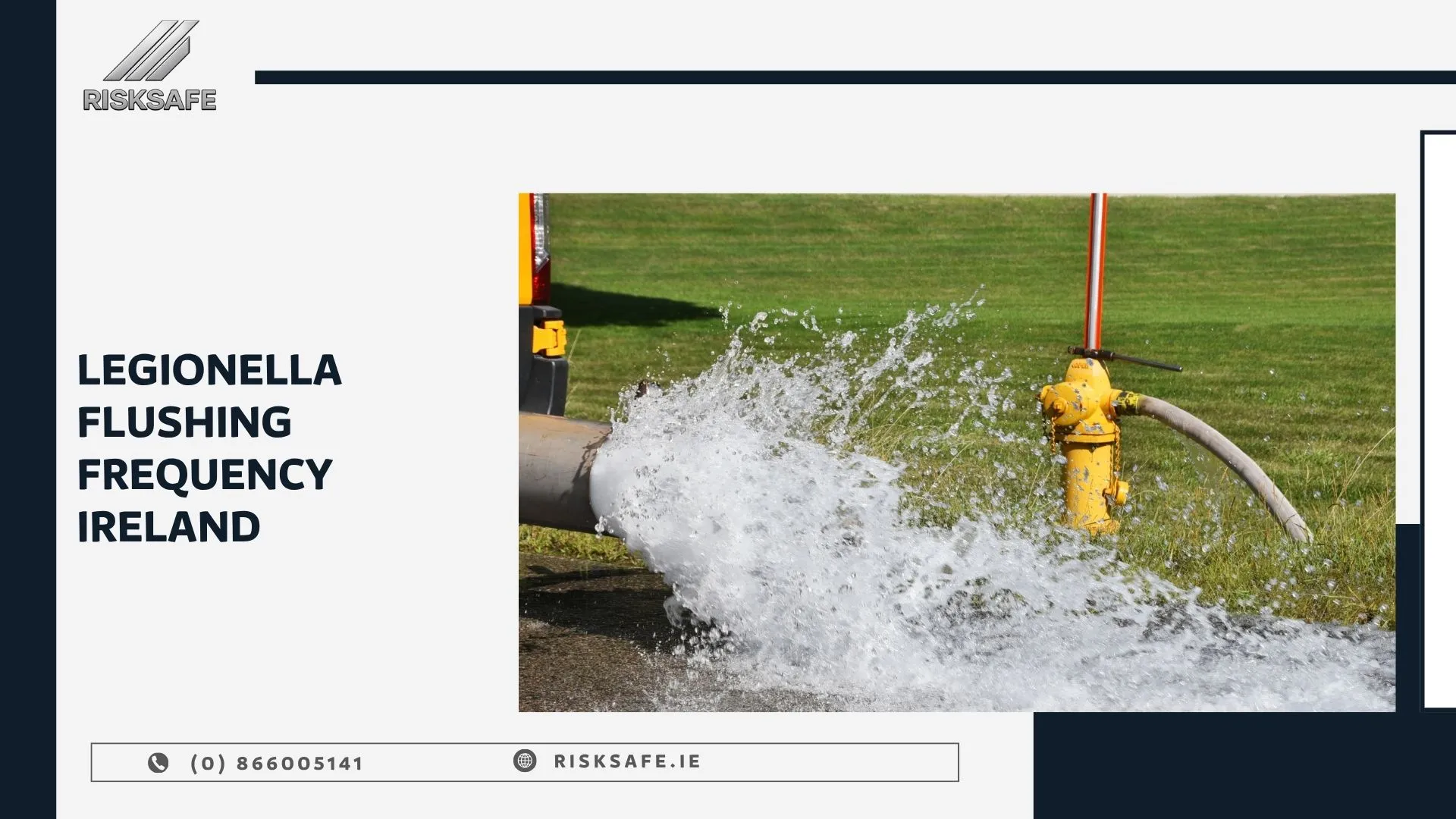
Water outlets that remain unused for long periods can create hidden water hygiene problems. Taps, showers and other outlets may appear clean from the outside while water remains stationary inside the connected pipework. This lack of movement can affect temperature control, water quality and the effectiveness of wider Legionella precautions.
Understanding legionella flushing frequency Ireland is therefore important for employers, landlords, property managers, facilities teams and anyone responsible for managing building water systems. Flushing can help maintain water movement through outlets that are used infrequently, but it must be based on a suitable risk assessment and a documented control plan.
A reliable programme should identify which outlets require attention, define how frequently they are flushed, assign responsibility and record whether each task was completed. It should also recognise that flushing is only one control measure and cannot correct every design, maintenance or management problem within a water system.
The Quick Answer: How Often Should Outlets Be Flushed?
There is no single flushing interval suitable for every building or water system. The correct legionella flushing frequency Ireland depends on outlet use, system design, occupancy, water temperatures, the people who may be exposed and the findings of the Legionella risk assessment.
The National Guidelines for the Control of Legionellosis in Ireland state that where an outlet is not used for more than a week, it should be flushed until the water reaches the predetermined temperature at the outlet. This makes a weekly review and flushing arrangement a practical baseline for many little-used outlets.
Higher-risk environments may require more frequent controls. Separate healthcare guidance, for example, may require daily flushing of outlets that are not frequently used in augmented care areas. The frequency should therefore reflect the building and the exposure risk rather than being copied from an unrelated property.
Why Little-Used Outlets Can Increase Legionella Risk
Regular water movement supports turnover and helps water temperatures respond to the system’s intended controls. When an outlet is rarely opened, water may remain in the branch pipework for prolonged periods.
Stagnation can contribute to conditions that support bacterial growth, particularly where water remains within temperatures favourable to Legionella. Sediment, scale and biofilm can also reduce the effectiveness of water management controls.
Concerns about stagnant water legionella Dublin are especially relevant in buildings with vacant units, seasonal rooms, hybrid-working offices, unused showers or facilities that close for extended periods. Risk can also arise where an outlet technically remains available but is used far less frequently than originally expected.
The Health Protection Surveillance Centre explains that Legionella can multiply in warm, stagnant water. The Health and Safety Authority’s Legionellosis guidance also highlights the importance of identifying and assessing sources of exposure within workplace water systems.
What Counts as a Little-Used Outlet?
A little-used outlet is a tap, shower or other water outlet that is not operated frequently enough to maintain regular water movement through its connected pipework.
Examples may include:
- Showers in changing rooms that are rarely occupied.
- Taps in vacant offices, apartments or hotel rooms.
- Outlets inside unused toilets or storage areas.
- Sinks in meeting rooms, kitchenettes or staff facilities.
- External taps used only during particular seasons.
- Outlets in temporarily closed floors or departments.
- Emergency showers that require a separate testing procedure.
- Facilities retained after layouts or working practices change.
Managing little used outlets Dublin should begin with an accurate outlet register. Relying on memory is unreliable, particularly in multi-storey, multi-occupancy or frequently changing buildings.
An outlet can also move in and out of the little-used category. A tap used daily during full occupancy may become a stagnation risk when a floor is vacant, employees work remotely or a tenant leaves.
How Should Flushing Frequency Be Determined?
The frequency should be established through a site-specific assessment rather than a generic calendar. A competent review should consider how often each outlet is normally used, the length and layout of the connected pipework, temperature performance, occupancy patterns and whether vulnerable people may be exposed.
For organisations researching legionella flushing frequency Dublin, a weekly schedule may be appropriate for outlets that would otherwise remain unused for more than seven days. However, this should not be interpreted as a universal rule that automatically makes every system safe.
Some outlets may require more frequent attention because of the environment or users. Others may need to be removed rather than flushed indefinitely, particularly where they serve no operational purpose and create unnecessary dead-end pipework.
A professional Water Risk Assessment Dublin can identify low-use areas, possible stagnation points and gaps in existing flushing or monitoring arrangements. The assessment should also establish whether the frequency remains proportionate to the actual risk.
Building a Legionella Flushing Regime
An effective legionella flushing regime Ireland should clearly explain what must be flushed, when it must happen and who is responsible. It should be understandable enough for another competent person to follow without relying on undocumented knowledge.
The regime should normally identify:
- Every outlet included in the programme.
- Its building, floor, room and unique reference.
- Whether hot, cold or both supplies require flushing.
- The required flushing frequency.
- The method or completion criteria.
- The person or role responsible.
- The records that must be completed.
- The escalation process for missed checks or abnormal findings.
- When the outlet list and flushing schedule will be reviewed.
Where several organisations occupy one building, responsibilities should be agreed in writing. The landlord, managing agent, facilities contractor and tenant employer should understand who maintains the outlet register and who completes each action.
The legionella flushing regime Ireland should form part of the wider Legionella control plan. It should not operate as an isolated spreadsheet with no connection to the risk assessment, temperature monitoring, maintenance programme or corrective actions.
How Should Little-Used Outlets Be Flushed?
Flushing should follow the method established by the building’s risk assessment and control plan. The objective is to draw fresh water through the outlet and connected branch pipework until the appropriate predetermined condition is reached.
A practical procedure may include confirming the outlet identity, checking the surrounding area, opening the outlet carefully and allowing the water to run as required by the written control arrangement. Hot and cold supplies may need separate consideration.
The person completing the task should minimise avoidable splashing and aerosol exposure, especially when dealing with showers or spray-producing equipment. If contamination, unusual water quality or loss of control is suspected, routine flushing should not continue without appropriate advice.
A fixed instruction such as “run every tap for two minutes” may not suit every outlet. Pipe length, flow, temperature and system design differ between buildings. Effective outlet flushing legionella Dublin arrangements should use site-specific instructions and clear completion criteria.
Why Temperature Matters During Flushing
Flushing and temperature control are connected, but they are not the same activity. A tap may be flushed regularly while the system still fails to maintain suitable hot or cold water conditions.
The predetermined temperature used as the completion point should come from the control plan and reflect the system’s design. Temperature readings that are slow to stabilise, remain consistently unsuitable or differ significantly from previous records may indicate a wider problem requiring investigation.
RiskSafe’s guide to the Legionella temperature range in Ireland explains why water temperature is an important part of assessing whether a system may support bacterial growth.
Facilities teams should avoid treating a single temperature reading as proof that the entire water system is controlled. Flushing observations and temperatures should be reviewed alongside storage, circulation, maintenance and system condition.
What Should Legionella Flushing Records Include?
Clear records show whether the control programme is actually being implemented. They also allow facilities teams to identify missed outlets, repeated failures and changes in system performance.
Effective flushing records legionella Ireland may include:
- Outlet identification and location.
- Scheduled flushing frequency.
- Date and time completed.
- Name or initials of the responsible person.
- Hot and cold water checks where required.
- Temperature or other completion information.
- Discolouration, odour, poor flow or unusual observations.
- Missed or inaccessible outlets.
- Corrective actions and escalation details.
Records should be completed at the time of the task rather than reconstructed later. Repeated copied entries, unexplained gaps or identical results may undermine confidence that the programme is being actively managed.
The value of flushing records legionella Ireland comes from review, not simply storage. A responsible person should check the records regularly, investigate exceptions and confirm that corrective actions have been completed.
Managing Vacant and Partly Occupied Buildings
Building use can change quickly. Offices may move to hybrid working, hotel rooms may close during quiet periods and apartments or commercial units may remain vacant between occupants.
These changes can turn previously active outlets into little used outlets Dublin without the written control plan being updated. Facilities teams should therefore communicate with managers, tenants and maintenance contractors whenever occupancy changes.
Before reopening an area, the existing flushing records, outlet condition, temperatures and wider controls should be reviewed. Prolonged shutdowns or evidence of poor control may require more than routine flushing.
The appropriate response should be determined by the risk assessment and competent advice. It may include system inspection, cleaning, disinfection, temperature checks, sampling in appropriate circumstances or removal of redundant pipework.
Flushing Is Not a Substitute for a Legionella Risk Assessment
Flushing is useful, but it cannot compensate for poor system design, unsuitable temperatures, redundant pipework, dirty storage tanks, inadequate circulation or unclear management responsibilities.
A negative water sample does not prove that every outlet is adequately controlled, and a completed flushing sheet does not prove that the wider water system is safe. These are individual pieces of a broader management process.
Organisations should understand the Legionella risk assessment legal requirements in Ireland and ensure that identified precautions are proportionate to the premises.
The legionella flushing frequency Ireland should be reviewed whenever the water system, building use, occupancy, equipment or control arrangements change. RiskSafe’s guide to Legionella risk assessment review frequency explains the events that may trigger an earlier review.
Common Flushing Programme Mistakes
Common weaknesses include:
- Using the same frequency for every building without assessing risk.
- Failing to identify all infrequently used outlets.
- Continuing to flush outlets that should be removed.
- Recording a tick without confirming the correct outlet was flushed.
- Missing tasks without escalation or corrective action.
- Ignoring discolouration, odour, poor flow or unsuitable temperatures.
- Continuing an outdated regime after occupancy changes.
- Allowing responsibility to become unclear between landlord and tenant.
- Treating flushing as a replacement for maintenance or risk assessment.
A weak outlet flushing legionella Dublin programme may create paperwork without providing meaningful control. The process should be practical, traceable and connected to current building use.
Frequently Asked Questions
-
Is Weekly Flushing Always Required?
Not for every outlet in every building. Irish guidance indicates that outlets unused for more than a week should be flushed, but the actual schedule must reflect the risk assessment, premises and users.
-
How Long Should an Outlet Be Flushed?
There is no universal number of minutes suitable for every outlet. Flushing should continue until the predetermined condition in the control plan is achieved, which may include reaching the required outlet temperature.
-
Should Hot and Cold Outlets Both Be Flushed?
Where both supplies can stagnate, each may need to be considered. The written procedure should explain which supplies require flushing and how completion is confirmed.
-
Can Flushing Remove the Need for Water Testing?
No. Flushing and testing have different purposes. Testing may be recommended in particular circumstances, but neither activity replaces a suitable Legionella risk assessment and control plan.
-
Who Should Complete the Flushing?
A designated person who understands the outlet register, procedure, recording requirements and escalation process should complete it. Responsibility should be documented and supported by suitable instruction.
-
When Should the Flushing Programme Be Reviewed?
Review it after changes to occupancy, building use, water-system layout, maintenance arrangements or risk. It should also be reviewed when records show repeated failures or the current programme no longer reflects outlet use.
Create a Practical Flushing Programme for Your Building
A suitable legionella flushing frequency Ireland programme should reflect how the building and water system are actually used. It must identify little-used outlets, set appropriate schedules, assign responsibility and produce records that management can review.
RiskSafe provides professional Water Risk Assessments in Dublin for businesses, landlords, property managers and organisations. The assessment can review low-use areas, possible stagnation points, temperature and flushing records, existing controls and the actions required to improve water safety management.
Contact RiskSafe to discuss your premises, current flushing arrangements and the appropriate scope for a building-specific water risk assessment.