Water temperature is one of the clearest warning signs in Legionella control, but it is also one of the easiest to misunderstand. A single reading does not tell you whether an entire water system is safe, and a “good” temperature at one outlet does not prove that storage, circulation, low-use branches, or remote outlets are under control. Understanding the legionella temperature range Ireland therefore means looking at how temperature interacts with flow, stagnation, storage, scale, biofilm, and building use.
For employers, landlords, facilities managers, and property teams in Dublin, Ireland, legionella temperature range Dublin searches often begin with one practical question: what temperatures encourage growth, and what readings should trigger investigation?
This RiskSafe guide explains the main temperature bands, hot and cold water management, and what monitoring can and cannot prove.
The Legionella Growth Temperature Ireland Readers Need to Remember
The Health and Safety Authority states that Legionella bacteria grow best between approximately 20°C and 45°C, with optimum growth around 35°C to 40°C. HSA guidance also notes that high temperatures, at least 60°C, kill the bacteria.
That makes the legionella growth temperature Ireland range important because poorly controlled systems can spend long periods inside it. Underused pipework, warm storage areas, poor insulation, and recirculation problems can all contribute.
The key point is not that every water sample between 20°C and 45°C contains dangerous levels of Legionella. Temperature is one risk factor. HSA guidance also identifies low flow, stagnation, rust, nutrients, and biofilm as conditions that can support bacterial multiplication.
Why 20°C to 45°C Is Often Called the Risk Zone
The legionella temperature range Ireland is often summarised as 20°C to 45°C because this is the band in which multiplication is most favourable. HPSC guidance similarly explains that Legionella can multiply in warm, stagnant water and identifies water systems, showers, spa pools, fountains, sprinklers, and other aerosol-producing sources as potential concerns.
In a Dublin building, temperature problems can develop in different places. Cold pipes may warm in plant rooms, little-used hot outlets may cool, and long branches may stagnate.
This is why legionella water temperature Dublin monitoring should look at the system as a network, not as a single tap.
Hot Water Legionella Temperature Ireland: Storage and Distribution Are Different
A common mistake is to treat one hot-water number as the target everywhere. Irish guidance distinguishes between storage and distribution.
HSA and HPSC material indicates that hot water should generally be stored at about 60°C and distributed so that it reaches at least 50°C, while cold water should be maintained below 20°C.
That distinction matters for hot water legionella temperature Ireland because a calorifier can be hot enough at the storage point while remote outlets still fail to reach the expected distribution temperature. Problems can arise from poor circulation, balancing issues, long pipe runs, heat loss, dead legs, or infrequently used branches.
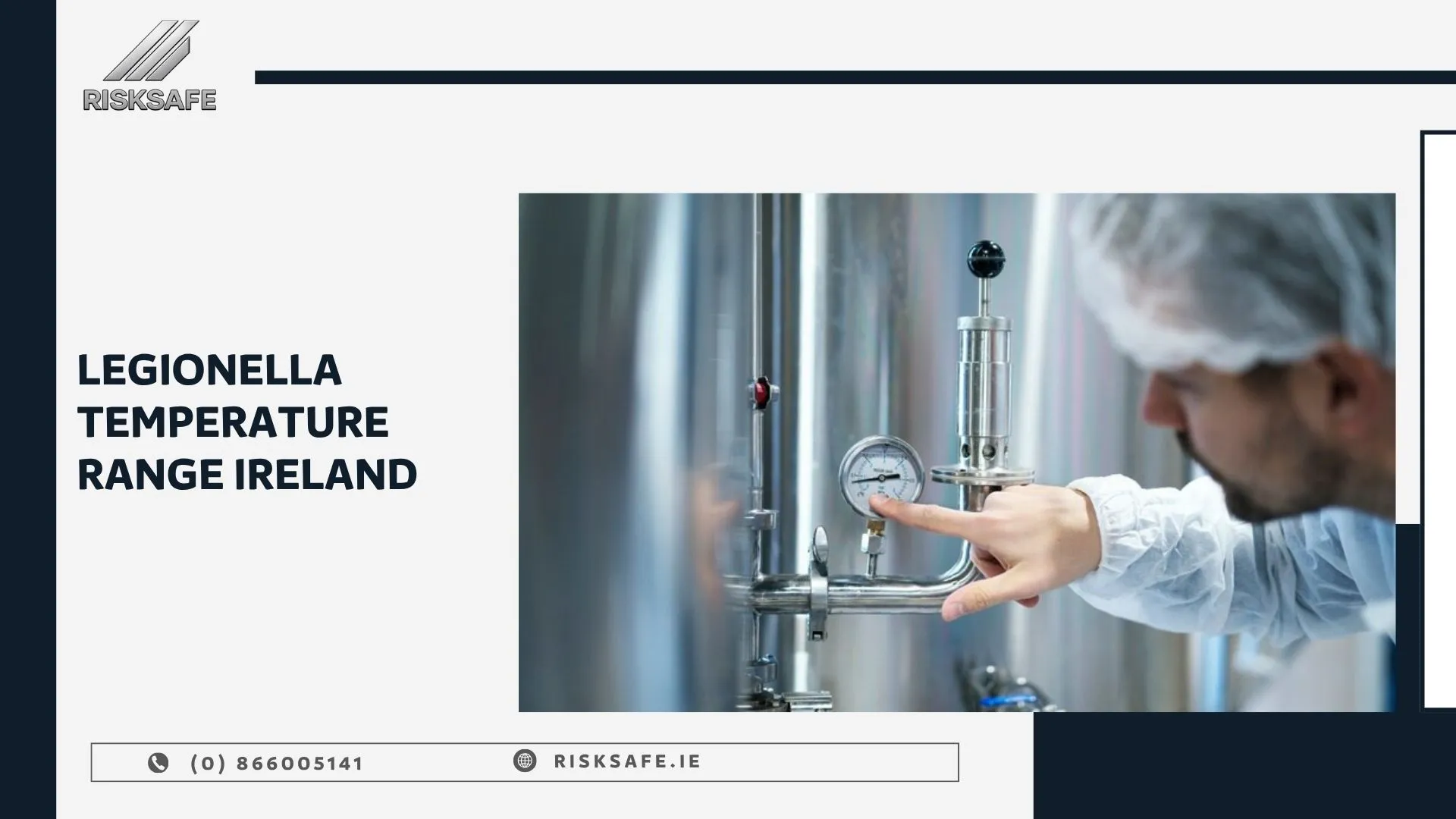
A useful monitoring programme compares storage, flow, return where applicable, and representative outlet temperatures.
Cold Water Legionella Temperature: “Cold” Should Actually Stay Cold
The cold water legionella temperature target is equally important. Irish guidance commonly uses below 20°C as the control benchmark for cold-water systems.
Cold water can warm when pipes run beside hot services, tanks sit in warm spaces, insulation is poor, or water remains unused.
For legionella temperature control Dublin, a cold-water reading above the expected range should prompt questions. Is the problem local to one outlet? Does the temperature rise only after prolonged stagnation? Is the storage tank warming? Are hot and cold pipes too close together? Has insulation deteriorated?
The answer should come from investigation, not from simply writing the reading into a logbook.
Do Not Confuse Outlet Temperature With User Comfort
Water-system temperature control and comfortable delivery temperature are not always the same thing.
Some buildings use thermostatic mixing valves to reduce scalding risk, so outlet water may be cooler than water maintained upstream. Irish Legionella guidance advises that thermostatic mixing valves should be located close to the point of use and that mixed pipework should be kept short where possible.
A temperature-monitoring plan should therefore identify where measurements are meant to be taken and what each reading represents. Measuring only after a mixing valve may not tell you whether the upstream hot-water control is working properly.
This is one reason a generic legionella temperature range Dublin checklist cannot replace a system-specific approach.
How to Take Temperature Readings That Actually Mean Something
Good temperature monitoring starts with consistency.
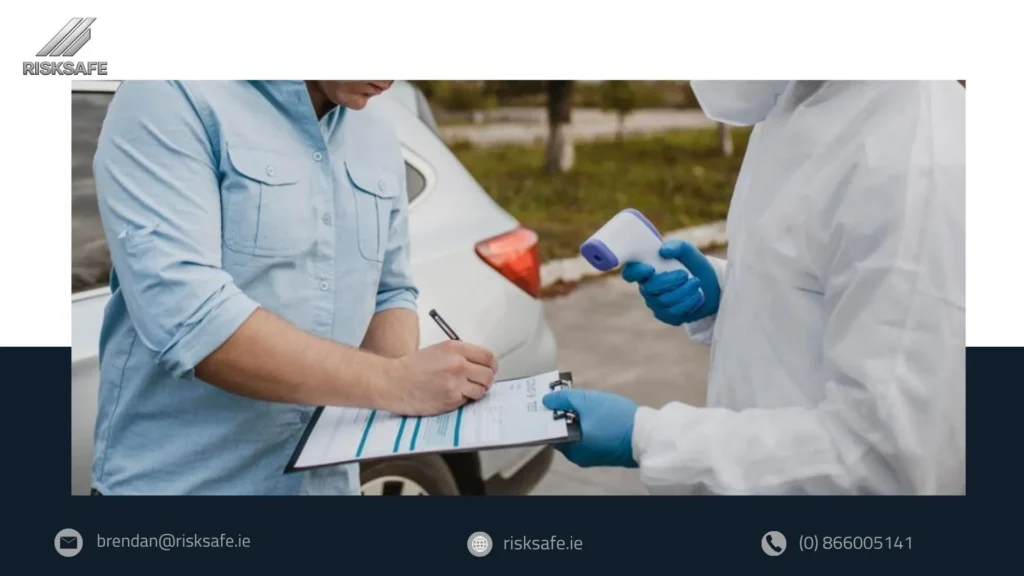
The person taking readings should know which outlets are representative, how the measurement should be taken, what instrument is used, and what action follows an exception.
For legionella water temperature Dublin, useful monitoring points may include the calorifier or hot-water storage outlet, the return on a circulating system, nearby outlets, distant outlets, cold-water storage, and representative cold taps.
The exact points and frequency should come from the building’s risk assessment and control plan. Copying another building’s schedule can miss the features that matter in your own system.
One Bad Reading Is a Clue; Repeated Bad Readings Are a Pattern
Temperature logs become valuable when someone reviews them.
If a distant Dublin office tap repeatedly takes too long to reach the expected temperature, the cause could involve circulation, an underused branch, balancing, or layout.
Likewise, if cold water legionella temperature readings regularly rise above the intended benchmark during warmer periods, the pattern may point toward heat gain, tank conditions, or pipe routing.
A control system should define who reviews abnormal readings, investigates them, authorises remedial work, and decides when the risk assessment needs review. Records without decisions are not effective control.
Temperature Alone Does Not Control Legionella
This is the most important limitation in the entire legionella temperature range Ireland discussion.
Legionella risk is influenced by more than temperature. HSA guidance highlights biofilm, stagnant or low-flow water, scale, sediment, rust, and other nutrients as factors that can support growth.
A building can therefore show acceptable temperatures at selected points and still contain low-use outlets, dead legs, poorly maintained tanks, contaminated showerheads, or sections of pipework where conditions differ.
The reverse is also true: one unusual temperature reading does not automatically prove that the whole system is uncontrolled. It tells you where to investigate.
That balanced interpretation keeps temperature monitoring useful rather than misleading.
Dublin Buildings Have Their Own Temperature-Control Challenges
For Dublin, Ireland premises, water-system conditions can change with occupancy and building operation.
Hybrid offices, hotels, apartments, commercial premises, schools, and leisure facilities can all experience low-use periods. Reduced use can increase stagnation. That is why legionella temperature control Dublin should be reviewed when occupancy, plumbing, storage, circulation, or system use changes materially.
If the building has already changed, do not assume the previous monitoring locations are still representative. That makes review especially important for Dublin properties with complex layouts, changing occupancy, or extensive distribution pipework.
Link Temperature Monitoring to a Water Risk Assessment
This article explains temperature principles. It is not a commercial landing page for water assessments and should not compete with one.
RiskSafe’s Water Risk Assessments Dublin page is the appropriate service destination for organisations that need a broader review of hot and cold water systems, storage, outlets, circulation, stagnation, monitoring arrangements, and Legionella-related controls.
That separation matters for SEO and for readers. Legionella temperature range Ireland answers an informational question. A water risk assessment considers how temperature fits into the actual building, people, system design, and control plan.
Readers who want the legal context can also use RiskSafe’s Legionella Risk Assessment Legal Requirement Ireland guide, while those reviewing an existing assessment can read Legionella Risk Assessment Review Frequency.
Where Other RiskSafe Services Fit
Water temperature is only one workplace issue. RiskSafe’s Health and Safety Audits Dublin cover wider safety management, while Fire Risk Assessments Dublin address fire hazards and controls. Where handling work creates a genuine training need, RiskSafe also provides Manual Handling Training Dublin. These services remain separate from Legionella temperature management.
Temperature Monitoring Mistakes Worth Catching Early
Several mistakes can weaken legionella temperature control Dublin.
Common mistakes include choosing convenient rather than representative outlets, using inconsistent methods, ignoring trends, and treating one compliant reading as proof that every branch is controlled. Repeated exceptions without corrective action should never become normal. Monitoring should create decisions, not just data.
A Practical Temperature Review for Dublin Property Teams
When reviewing legionella temperature range Dublin arrangements, ask:
Is hot water stored at the intended control temperature? Does circulating hot water maintain suitable distribution temperatures? Do distant outlets perform differently from nearby outlets? Is cold water consistently kept below the expected benchmark? Are low-use sections identified? Are abnormal readings investigated? Are instruments suitable and maintained? Are records reviewed for trends?
Also ask whether building changes have created new dead legs, low-use outlets, or longer periods of stagnation.
For official Irish guidance, consult the HSA’s Legionnaires’ Disease information and the HPSC National Guidelines for the Control of Legionellosis in Ireland.
Frequently Asked Questions About Legionella Temperature Range Ireland
-
What is the main Legionella growth temperature Ireland range?
Irish guidance identifies approximately 20°C to 45°C as the range where Legionella can multiply, with particularly favourable growth around 35°C to 40°C.
-
What should hot water Legionella temperature Ireland controls aim for?
Irish guidance commonly indicates hot-water storage around 60°C and distribution so that water reaches at least 50°C, subject to the design and risk controls of the system.
-
What is the cold water Legionella temperature target?
Cold water should generally be maintained below 20°C. Readings above that benchmark should be investigated in the context of the system and risk assessment.
-
Does water above 60°C immediately make a system safe?
No. High temperature is an important control factor, but it does not replace system design, maintenance, flow management, cleaning, monitoring, and a suitable risk assessment.
-
Should every Dublin outlet be checked?
The monitoring plan should identify representative and higher-risk points based on the actual system. The correct schedule and locations should come from the site-specific assessment and control plan.
-
Can Legionella grow in cold water?
The bacteria do not appear to multiply below 20°C, but they may remain present and can multiply later if conditions become favourable.
Use Temperature as Evidence, Not as a Shortcut
The practical lesson from legionella temperature range Ireland is simple: temperature is one of the most useful control indicators, but only when readings are representative, reviewed, and connected to action.
For Dublin, Ireland employers, landlords, and facilities teams, good management means keeping hot water hot enough within the control strategy, keeping cold water cold, investigating exceptions, and looking for the system conditions behind the numbers.
RiskSafe supports that wider picture through Water Risk Assessments Dublin, where temperature, stagnation, storage, outlets, records, and Legionella controls can be considered together. The aim is not to chase one perfect reading. It is to understand whether the whole water system is being managed consistently.