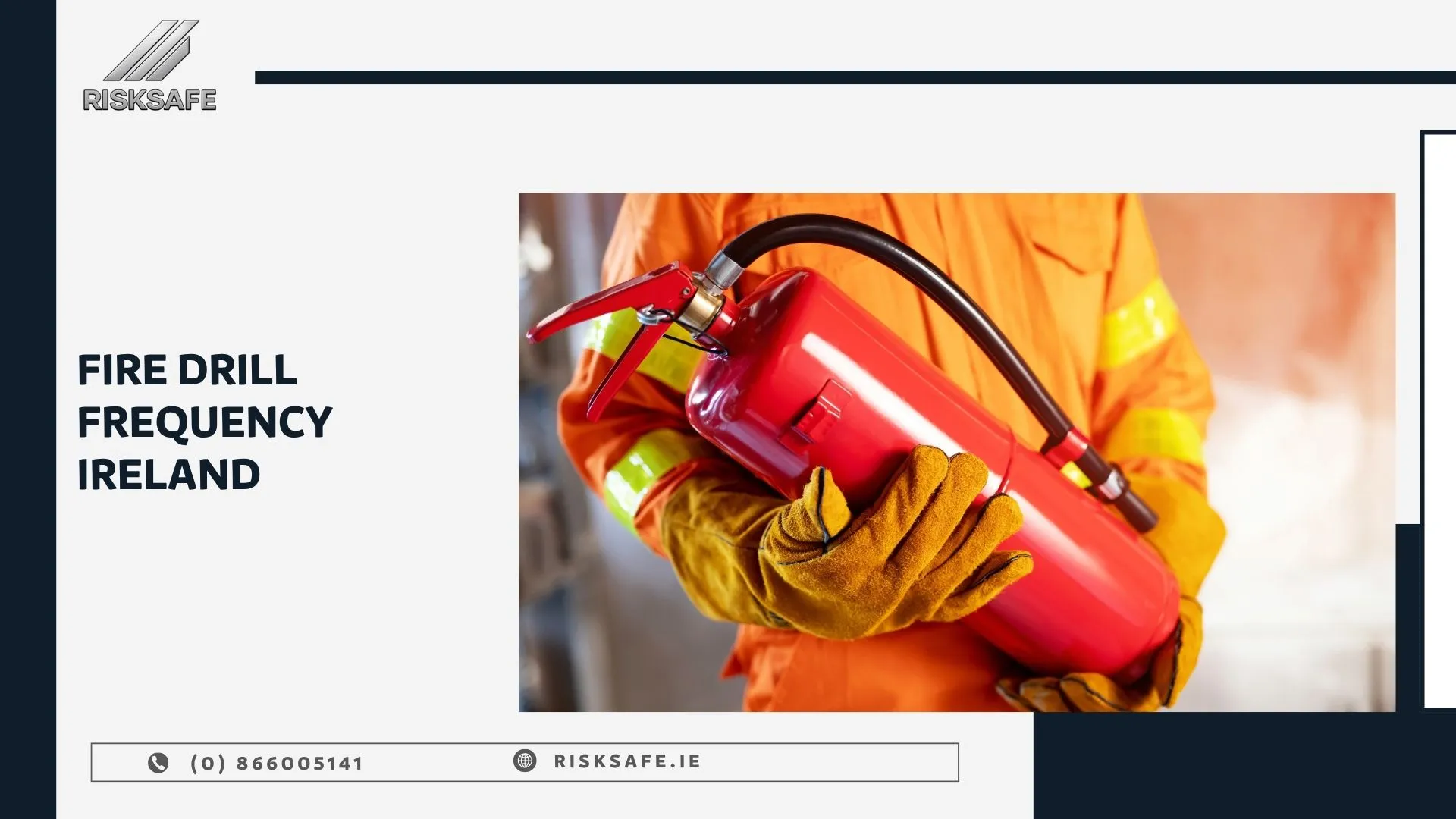
A fire drill should do more than make an alarm sound and move people outside. A useful drill shows whether employees understand the emergency procedure, whether escape routes work in practice, whether responsibilities are clear, and whether problems appear when a real evacuation is simulated. Understanding fire drill frequency Ireland is therefore an important part of workplace emergency planning.
For employers, landlords, facilities teams, and managers in Dublin, Ireland, fire drill frequency Dublin should be based on the risks and realities of the premises rather than treated as a calendar exercise. Staff turnover, building layout, shift patterns, visitors, contractors, people who may need assistance, and changes to the workplace can all affect how often practice is sensible.
This RiskSafe guide explains fire drill requirements Ireland, how to plan meaningful drills, what to record, and when Dublin workplaces should consider carrying out an additional exercise.
Fire Drills Are About Testing the Emergency Plan
Irish workplace law requires employers to prepare and revise adequate plans and procedures for emergencies and serious and imminent dangers. Section 11 of the Safety, Health and Welfare at Work Act 2005 also requires employers to provide necessary measures for fire fighting and workplace evacuation.
The Health and Safety Authority says emergency procedures must be in place and practised so people can evacuate safely during a fire. Its emergency escape guidance specifically asks whether regular fire drills are conducted and monitored so that improvements can be made.
That distinction matters. Workplace fire drills Dublin businesses carry out should test a real emergency plan. They are not simply demonstrations for employees. A drill should reveal whether people know what to do, whether the route is usable, whether designated responsibilities work, and whether management can account for problems afterwards.
Employers can review the official HSA emergency escape and fire fighting guidance and Section 11 of the Safety, Health and Welfare at Work Act 2005.
How Often Should Fire Drills Be Carried Out Ireland?
A common search is how often should fire drills be carried out Ireland, but there is no single statutory number that fits every workplace.
The HSA requires emergency plans and procedures to be practised and refers to regular fire drills. In its educational workplace guidance, the HSA notes that workplaces usually carry out fire drills at least twice annually. That is useful practical guidance, but employers should not treat “twice a year” as a universal legal minimum that automatically suits every building.
The right fire drill frequency Ireland should reflect the workplace risk assessment, occupancy, complexity, employee turnover, operating hours, previous drill performance, and any significant changes.
A straightforward Dublin office with stable staffing may need a different programme from a multi-storey hospitality premises, warehouse, care environment, busy retail location, or site operating several shifts.
When Dublin Workplaces May Need More Frequent Fire Drills
There are situations where fire drill frequency Dublin may need to increase.
Consider an additional drill after major staffing changes, relocation, refurbishment, changes to escape routes, installation of new partitions, alterations to assembly points, changes in occupancy, or significant changes to the emergency plan.
More practice may also be appropriate where previous drills found delays, confusion, blocked routes, poor communication, employees returning for belongings, problems accounting for people, or uncertainty about fire warden responsibilities.
New employees should receive appropriate emergency information during induction. If a workplace experiences rapid recruitment, seasonal staffing, contractor activity, or frequent turnover, waiting for the next routine drill may leave many people unfamiliar with the evacuation procedure. HSA workplace guidance emphasises that workers should know what to do during a fire or other emergency.
What Should a Fire Evacuation Drill Dublin Exercise Test?
A fire evacuation drill Dublin workplace exercise should test much more than walking to an assembly point.
It can help determine whether the alarm is recognised, occupants respond promptly, exits are accessible, escape routes are understood, doors operate as expected, staff know the assembly location, and designated personnel understand their duties.
The drill should also examine how visitors, contractors, lone workers, employees working away from their usual area, and people who may need evacuation assistance are managed.
The HSA advises that escape arrangements should consider everyone who may be present and that emergency plans should be practised. A successful evacuation should therefore be judged by safe behaviour and the quality of the process, not simply by achieving the fastest possible time.
Speed matters, but rushing people in a way that creates slips, trips, falls, or panic defeats the purpose.
Fire Drill Requirements Ireland: Prepare Before the Alarm Sounds
Management should know what the drill is intended to test. Relevant people should understand their roles, the assembly area should be suitable, routes should be available, and arrangements for anyone needing assistance should already be established.
Before a drill, consider whether normal business conditions create complications. Are deliveries blocking a yard? Are contractors working in a stairwell? Are some employees on another floor? Is reception responsible for visitors? Does the building share escape routes with another occupier?
The Dublin Fire Brigade guidance on Fire Safety at Work highlights staff training, fire drills, safe assembly areas, evacuation procedures, assigned duties, and records as important elements of workplace fire safety.
Fire Drill Records Ireland: What Should You Document?
Good fire drill records Ireland should provide evidence that drills are not simply carried out and forgotten.
Record the date and time, areas involved, approximate number of participants, scenario or objective, evacuation observations, problems identified, actions required, person responsible for each action, and target completion date.
It can also be useful to record whether visitors or contractors were present, whether designated roles worked, whether anyone needed assistance, and whether all relevant areas were accounted for.
Dublin Fire Brigade recommends maintaining fire safety records, including information about staff training and fire drills. The HSA also emphasises monitoring drills so improvements can be put in place.
A short record that says “fire drill completed successfully” provides limited learning. The real value comes from documenting what happened and what should change.
What Should You Do After a Poor Fire Drill?
If people used the wrong exit, did not hear or recognise the alarm, gathered in the wrong location, failed to report to the assembly point, or did not understand their duties, management should investigate why.
Avoid treating every mistake as an employee discipline problem. Confusion may indicate unclear instructions, poor induction, unsuitable signage, weak supervision, layout problems, or an emergency plan that does not match the real workplace.
Actions should be assigned and completed. Where changes materially affect the emergency procedure, employees should be informed and another drill may be appropriate.
This improvement cycle is central to meaningful fire drill frequency Ireland planning.
Fire Drills Do Not Replace a Fire Risk Assessment
This article answers an informational question about fire drill frequency Ireland. It does not replace a broader assessment of fire hazards and precautions.
RiskSafe’s Fire Risk Assessments Dublin review workplace fire hazards, escape arrangements, warning systems, fire doors, emergency lighting, procedures, and existing controls within the agreed assessment scope.
That keeps the search intent clear. A reader looking for guidance on fire drill requirements Ireland receives practical information here, while a Dublin organisation seeking a professional assessment can use the dedicated service page.
Connect Fire Drills With Wider Health and Safety Management
Emergency planning is part of a wider safety management system. RiskSafe’s Health and Safety Audits Dublin can review workplace documentation, risk assessments, training records, emergency arrangements, and action tracking as part of an agreed audit.
This is particularly useful where drills reveal organisational issues rather than physical fire defects. Missing records, unclear responsibilities, weak induction, or actions that remain open can indicate broader management gaps.
For Dublin, Ireland employers, the aim should be consistent control rather than isolated safety activities.
Other RiskSafe Services for Dublin Workplaces
RiskSafe also supports Dublin organisations with other workplace risks.
Property and facilities teams responsible for building water systems can explore Water Risk Assessments Dublin for review of water-system risks and relevant Legionella-related controls.
Where work includes lifting, carrying, pushing, or pulling and training is appropriate, Manual Handling Training Dublin provides practical workplace instruction.
These services do not change the purpose of this guide. They simply allow readers managing several responsibilities to reach the relevant RiskSafe service without turning a fire drill article into a general sales page.
A Practical Fire Drill Checklist for Dublin Employers
Before the drill, confirm the objective, emergency roles, assembly point, routes, visitor arrangements, and any assistance requirements.
During the exercise, observe whether the alarm is recognised, people respond appropriately, escape routes remain usable, assigned roles function, and occupants reach the correct assembly location.
Afterwards, record observations, speak with relevant employees, identify failures or delays, assign actions, update the emergency procedure where necessary, and decide whether another exercise is required.
A useful fire evacuation drill Dublin programme asks three questions: Did people know what to do? Did the arrangements work? What needs to improve before a real emergency?
Frequently Asked Questions About Fire Drill Frequency Ireland
-
How often should fire drills be carried out Ireland workplaces?
The HSA calls for regular drills and practised emergency procedures. HSA educational guidance notes that workplaces usually conduct drills at least twice annually, but frequency should reflect workplace risk and circumstances.
-
Is twice a year a legal minimum?
It should not be presented as a universal statutory minimum for every Irish workplace. Employers must maintain adequate emergency arrangements and practise them appropriately. Risk, changes, occupancy, and previous performance should influence frequency.
-
Should Dublin offices carry out fire drills?
Yes. Office workplaces still need adequate emergency plans and procedures. Workplace fire drills Dublin help test whether occupants understand the alarm, escape routes, assembly arrangements, and assigned responsibilities.
-
Should new employees wait until the next scheduled drill?
New employees should receive emergency and evacuation information as part of appropriate workplace instruction. Significant staffing changes may also justify an additional drill.
-
Do fire drills need to be recorded?
Maintaining fire drill records Ireland is good fire safety management and helps show what was tested, what problems were found, and whether corrective actions were completed. Dublin Fire Brigade includes staff training and fire drills among the matters that should form part of workplace fire safety records.
-
Does a fire drill test the fire alarm system?
A drill may involve operating the alarm, but it does not replace routine alarm testing, competent servicing, maintenance, or repairs.
Turn Every Fire Drill Into a Learning Exercise
The best approach to fire drill frequency Ireland is not to chase a number and stop thinking. Regular drills should help employers test emergency arrangements, identify weaknesses, and improve how people respond.
For workplaces in Dublin, Ireland, consider the building, occupants, work patterns, previous drill findings, and significant changes when setting the programme. Keep meaningful records and close actions instead of repeating the same exercise without improvement.
RiskSafe supports Dublin organisations through Fire Risk Assessments Dublin, helping businesses review wider fire safety arrangements without turning this informational guide into a competing service page.