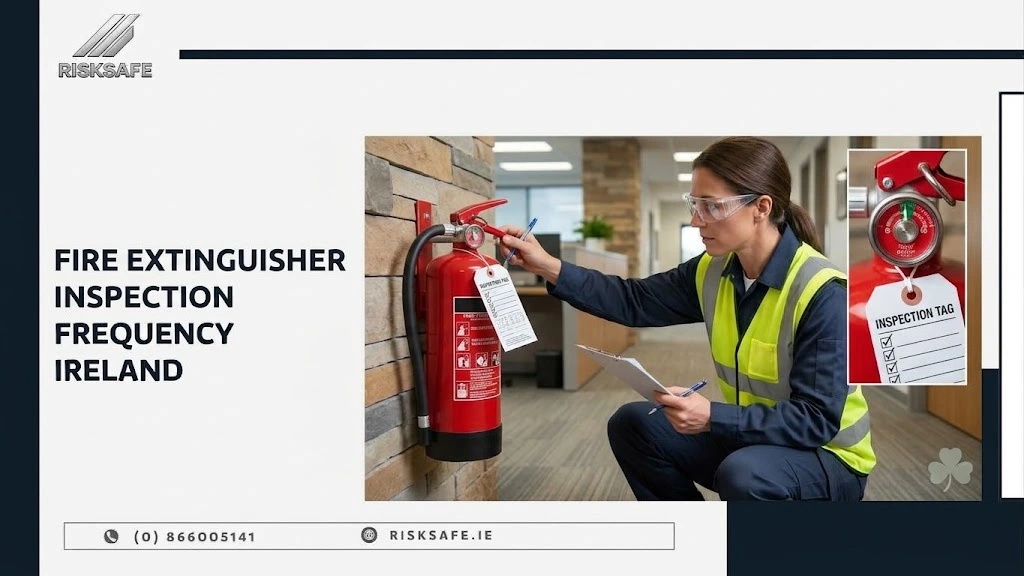
A fire extinguisher can remain untouched for years, yet it must be ready within seconds. A blocked location, broken seal, damaged hose or loss of pressure may go unnoticed during an ordinary working day. That is why fire extinguisher inspection frequency Ireland is about a reliable cycle of checks, professional servicing and corrective action—not just a date on a calendar.
Monthly fire extinguisher checks identify visible problems between service visits. An annual fire extinguisher service Ireland businesses arrange is a more detailed examination by a competent person. One does not replace the other.
This guide explains what to check, record and escalate before the next planned service.
How Often Should Fire Extinguishers Be Checked?
A practical programme normally has three layers:
- Monthly visual inspection: Check every extinguisher is present, accessible and apparently serviceable. Record the result and report defects.
- Annual competent service: Arrange professional servicing at least annually and retain the service documentation.
- Additional action when required: Arrange prompt attention after use, damage, tampering, pressure loss, environmental exposure or another event that may affect reliability.
The Health and Safety Authority states that fire-fighting equipment must be inspected and maintained as often as necessary to keep it in good working order and serviced annually by a competent person. Dublin Fire Brigade’s Fire Safety Register also provides for monthly extinguisher inspections.
The simple answer is “monthly and annually”, but the intervals involve different people and work. Harsh environments may justify more frequent visual checks.
Inspection, Servicing and Risk Assessment Are Different
A monthly inspection is a visual user check. It asks whether the extinguisher is where it should be, can be reached and shows any obvious defect. It does not involve dismantling, discharging or repairing the unit.
Servicing is technical maintenance. A competent service provider examines the equipment in accordance with the applicable standard, manufacturer information and extinguisher type. This is the core of fire extinguisher servicing frequency Ireland businesses need to manage.
A fire risk assessment is broader. It considers ignition sources, people at risk, warning, escape, emergency lighting, fire doors, firefighting equipment and management. A current service label does not prove the premises is adequately protected.
If you need the wider arrangements reviewed, RiskSafe provides Fire Risk Assessments Dublin for businesses, landlords, property managers and organisations. This service is distinct from specialist extinguisher servicing.
Why Monthly Fire Extinguisher Checks Matter
During a year, an extinguisher may be moved, hidden behind stock, struck or used without being reported. Its pin, seal or pressure can also change.
Monthly fire extinguisher checks can catch these issues before an emergency, especially where equipment faces weather, moisture, vibration, impact or heavy traffic.
Assign the check to a named person and cover every unit. A location list or numbered asset register helps prevent omissions.
Never test an extinguisher by releasing its contents. Refer doubtful equipment to a competent service provider and arrange temporary replacement where necessary.
A Practical Fire Extinguisher Inspection Checklist
Use the following fire extinguisher inspection checklist for a routine visual review. Adapt it to your premises, fire-safety register and competent advice.
1. Confirm the Extinguisher Is Present
Check it is in its designated position and matches the location or asset number in the register.
2. Check Access and Visibility
It should be visible and reachable without moving furniture, stock or equipment. Required signage should also remain visible.
3. Inspect the Safety Pin and Tamper Seal
Confirm the pull pin is correctly positioned and the tamper seal is intact. Damage may indicate interference or use.
4. Read the Pressure Indicator
Where fitted, the pressure gauge should show the correct operating zone. The HSA advises removing the unit for servicing if its needle is not in the green area.
5. Look for Physical Damage
Look for dents, corrosion, cracks, leaks, loose parts or contamination on the cylinder, handle, hose, nozzle or horn.
6. Check Labels and Dates
Instructions and service information should be legible, the maintenance label attached and the next due date current.
7. Look for Signs of Discharge
A disturbed pin, residue or pressure loss may indicate use. Refer any discharged unit for appropriate servicing or replacement.
8. Record the Result
Record the date, location, outcome, inspector and action required. Give each defect an owner and target date.
This fire extinguisher inspection checklist supports routine oversight; it is not a technical service procedure or proof that the extinguisher is suitable for the hazard.
What Happens During an Annual Fire Extinguisher Service?
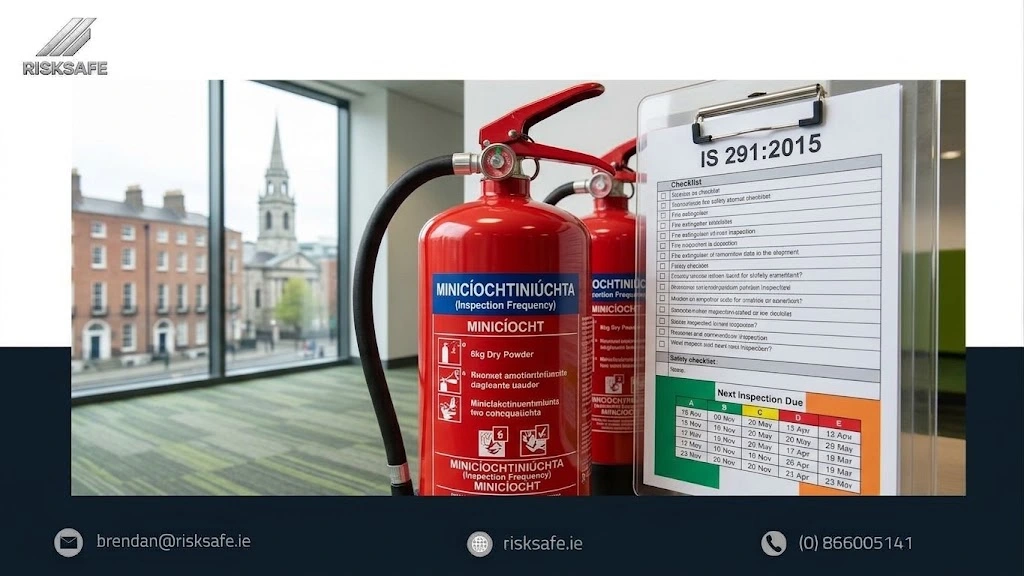
An annual fire extinguisher service Ireland organisations arrange requires a person with the necessary competence, information, tools and equipment. It should follow the current Irish standard and manufacturer requirements.
Depending on the unit, the competent person may examine the body, mechanism, hose, horn, seals and pressure or contents. Required repairs, recharge, further examination or replacement should be identified. Retain the service report.
The relevant standard is I.S. 291:2015+A1:2022, covering selection, commissioning, installation, inspection and maintenance. Different extinguisher types can require different actions, so ask the competent provider to confirm each asset’s schedule.
The fire extinguisher servicing frequency Ireland workplaces follow should therefore include the annual visit plus any additional maintenance identified by the standard, manufacturer, service provider or equipment condition.
When Should You Act Before the Annual Service Date?
The next printed service date is not permission to ignore a developing problem. Arrange prompt competent attention when:
- An extinguisher has been used or may have been partly discharged.
- The pressure indicator is outside its correct operating range.
- A safety pin or tamper seal is missing, damaged or disturbed.
- The cylinder, valve, handle, hose, nozzle or horn is damaged.
- There is visible corrosion, leakage or contamination.
- The extinguisher is missing or has been moved from its designated point.
- A label is illegible or the maintenance status cannot be confirmed.
- Building work, impact, heat, water or chemicals may have affected it.
- The fire hazards, layout or use of the area have changed.
Do not leave a defective unit as though available. Manage the defect and ensure protection is not left inadequate while it is away.
Could Some Premises Need More Frequent Checks?
More frequent user checks may be appropriate with vandalism, heavy use, vibration, vehicle movement, corrosive atmospheres, outdoor exposure, temporary layouts or repeated missing equipment.
Conversely, increasing the number of visual checks does not change the need for competent annual servicing. The right fire extinguisher inspection frequency Ireland programme combines site oversight with technical maintenance rather than choosing one or the other.
Review the frequency after repeated defects, an incident or significant change, and document the reason.
Keep an Inspection Record That Leads to Action
Dublin Fire Brigade advises workplaces to maintain a Fire Safety Register covering extinguisher servicing and maintenance alongside alarms, emergency lighting, training and drills. A useful extinguisher record includes:
- A unique asset or location reference.
- Extinguisher type and designated position.
- Date of the monthly inspection and the result.
- Defects, missing equipment or obstructed access.
- Corrective action, owner and deadline.
- Date the action was completed.
- Annual service date and next due date.
- Service provider documentation.
Records need to show closure, not just discovery. If six monthly entries repeat “access blocked”, the paperwork demonstrates a persistent management failure rather than effective inspection.
Avoid These Common Inspection Mistakes
Do not treat the annual sticker as the entire programme; damage can occur the next day. Site staff should not dismantle, discharge, refill or repair equipment unless competent and equipped. Other mistakes include skipping difficult locations, recording “OK” without visiting, failing to replace missing units and leaving service defects open.
More equipment does not automatically mean better protection. It must suit the potential fire, be correctly positioned and support safe evacuation. Specialist advice may be necessary.
Connect Extinguisher Checks With the Wider Fire-Safety System
An extinguisher is only one layer of protection. People need warning, a clear escape route and instructions that prioritise safety. Portable equipment is not for a developed fire that endangers the user.
Use your inspection findings to look for connected weaknesses:
- Review fire alarm testing frequency in Ireland so warning arrangements are not overlooked.
- Check emergency lighting testing frequency in Ireland to support evacuation if normal lighting fails.
- Use the fire door inspection checklist for Ireland to identify visible door defects.
- Review fire drill frequency in Ireland so people can practise the emergency procedure.
- Use RiskSafe’s Fire Risk Assessment Checklist Ireland for a broader management review.
When several weaknesses appear together, a professional fire risk assessment can turn scattered observations into prioritised actions.
Fire Extinguisher Inspection Frequency Ireland: A Simple Management Cycle
An effective cycle is easy to understand:
Inspect monthly. Use a consistent route and checklist, verify every asset and record the outcome.
Escalate immediately. Do not wait for the annual visit when equipment is missing, damaged, discharged or outside its correct pressure range.
Service annually. Use a competent provider and retain the report or certificate.
Close actions. Confirm repairs, replacement units and access problems have actually been resolved.
Review after change. Reconsider extinguisher provision when the layout, occupancy, process, materials or fire hazards change.
This makes routine checks meaningful and connects professional servicing to day-to-day management.
Frequently Asked Questions
-
How often should workplace fire extinguishers be visually inspected?
Dublin Fire Brigade’s Fire Safety Register provides for monthly inspections. Increase oversight where damage, obstruction or tampering is more likely.
-
Is an annual service enough on its own?
No. Annual competent servicing should be supported by routine visual checks and prompt action when a defect, discharge or change is identified.
-
Who can carry out the monthly check?
A suitably instructed person can complete the visual check. Leave technical maintenance to a competent provider.
-
What should happen if the gauge is not in the green area?
The HSA advises removing the extinguisher for servicing. Manage the defective unit clearly and arrange suitable replacement cover as necessary.
-
Should a partially used extinguisher wait until its next service?
No. Treat any used or possibly discharged extinguisher as requiring prompt competent attention, even if it still appears to contain extinguishing agent.
-
Does servicing confirm that the building has the correct extinguishers?
Not by itself. Suitability depends on the premises, hazards and fire classes. Provision and positioning should be considered through competent advice and the wider fire risk assessment.
Turn Inspection Findings Into a Safer Workplace
The best answer to fire extinguisher inspection frequency Ireland is a working system: inspect visually each month, arrange competent servicing annually, act immediately on defects and maintain records that show completion.
If your checks reveal wider concerns about equipment suitability, escape routes, fire doors, alarms, emergency lighting, occupancy or fire-safety responsibilities, RiskSafe can review the complete picture. Contact RiskSafe to discuss a professional fire risk assessment for your Dublin premises and receive clear, prioritised recommendations.