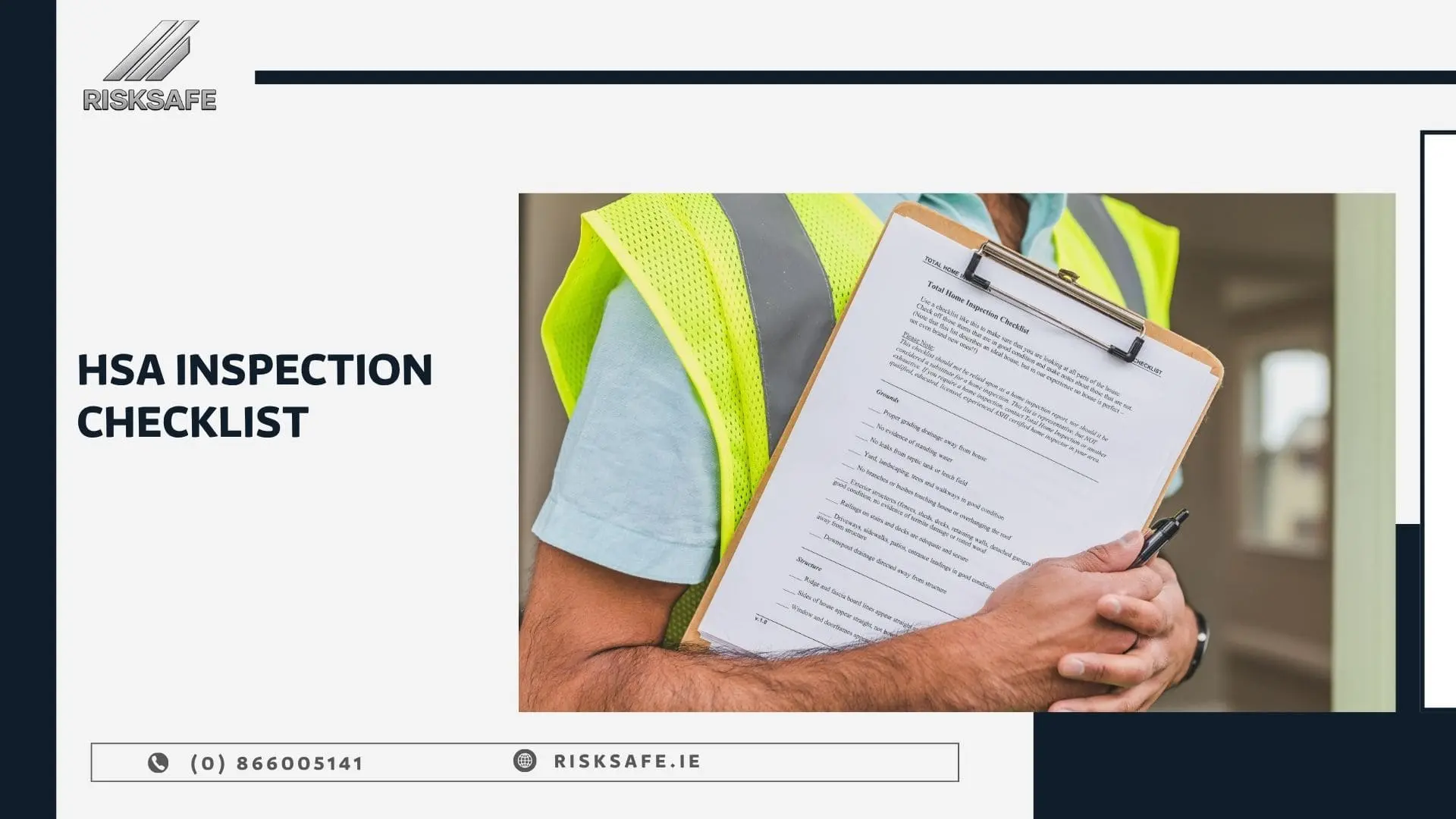
An HSA inspection checklist helps Irish employers understand what to review before a Health and Safety Authority inspector visits the workplace. It should cover the Safety Statement, risk assessments, training records, emergency procedures, incident reporting, contractor controls, employee consultation, workplace conditions, and evidence that corrective actions are being completed.
For Dublin businesses, preparation is not about creating paperwork at the last minute. It is about showing that health and safety is managed every day. Risksafe provides practical Health and Safety Audits in Dublin to identify gaps, improve workplace systems, and help employers prepare for an HSA inspection with greater confidence.
What Is an HSA Workplace Inspection?
An HSA workplace inspection is a visit by a Health and Safety Authority inspector to review whether an employer is meeting Irish workplace safety and health duties.
According to the HSA inspection guidance, the inspector normally seeks to meet the most senior person in charge, together with the safety and health manager, adviser, or safety representative where these roles exist. The inspector may then review documentation and examine conditions, work activities, equipment, systems, and controls.
Quick HSA Inspection Checklist for Irish Employers
Use this health and safety inspection checklist Ireland employers can adapt:
- Safety Statement.
- Workplace-specific written risk assessments.
- Evidence that control measures are implemented.
- Employee training and instruction records.
- Emergency and evacuation procedures.
- Fire safety arrangements.
- First-aid provisions and trained personnel.
- Accident, incident, and near-miss records.
- Statutory reports where required.
- Machinery and equipment inspection records.
- Maintenance and testing documents.
- Manual handling risk assessments and training.
- Chemical inventories and Safety Data Sheets.
- Contractor selection and supervision records.
- Employee consultation arrangements.
- Safety representative details, where applicable.
- Personal protective equipment records.
- Workplace inspection reports.
- Corrective action plans and completion evidence.
- Relevant certificates, permits, and specialist assessments.
How Should You Prepare for an HSA Inspection?
To prepare for HSA inspection activity, begin with a realistic review of your workplace. Do not focus only on documents. Inspectors can compare written procedures with what employees actually do, how equipment is used, whether exits remain clear, and whether known hazards have been corrected.
Start by identifying the person who will meet the inspector. This should normally be a senior manager who understands the business and can access records quickly. Relevant managers, the safety representative, maintenance staff, or other competent people should also be available where appropriate.
Review your HSA Inspection Checklist, collect documents in one accessible location, and walk through the premises as though you were the inspector. Speak with employees, inspect work areas, check outstanding actions, and correct obvious failures promptly.
Risksafe can carry out a professional Health and Safety Audit in Dublin before an inspection. The audit provides an independent review and a prioritised improvement plan based on the workplace’s actual risks.
What HSA Inspection Requirements Should Employers Expect?
Safety Statement
The Safety Statement should describe how the organisation manages safety, health, and welfare. It must be based on workplace-specific risk assessments and should identify responsibilities, controls, emergency arrangements, consultation procedures, and review processes.
The HSA explains that inspectors look for written evidence of the preparation and implementation of the Safety Statement under Section 20 of the Safety, Health and Welfare at Work Act 2005.
For a detailed review, read Risksafe’s guide to Safety Statement Ireland after that supporting article is published at the planned URL.
Written Risk Assessments
Risk assessments should identify hazards, evaluate risks, record controls, and assign further actions where necessary. They should be suitable for the business rather than copied from an unrelated workplace.
Under Section 19 of the 2005 Act, employers must identify workplace hazards, assess the risks, and keep written assessments. The HSA Safety Statement and Risk Assessment guidance explains that controls should be proportionate to the real risks involved.
Inspectors may look for evidence that risk assessments are reviewed after changes, incidents, new equipment, altered processes, or concerns about existing controls.
Training Records
Training records should show who attended, when training occurred, what was covered, who delivered it, and whether practical competence was assessed where relevant.
For manual handling duties, link your records to actual task assessments. Risksafe’s article on Manual Handling Training Requirements Ireland explains why training should support risk reduction rather than replace it.
Where certificates require review, the guide to Manual Handling Certificate Expiry Ireland can help employers plan refresher training and maintain clearer records.
Incident and Corrective Action Records
Keep records of accidents, near misses, dangerous occurrences, investigations, and actions taken to prevent recurrence.
An inspector may examine whether previous incidents revealed weaknesses and whether the business responded. A report that identifies corrective actions but leaves them unfinished may raise concerns about implementation.
What Happens During an HSA Inspector Visit?
During an HSA inspector visit, the inspector normally introduces the purpose and nature of the inspection, meets relevant workplace representatives, reviews documentation, and tours the premises.
The inspector may speak with managers and employees, take photographs or measurements, examine equipment, request records, ask for explanations, and assess whether documented procedures are followed in practice.
Under Section 64 of the 2005 Act, HSA inspectors have statutory powers that may include entering workplaces, making examinations, requiring information, taking copies of records, directing that areas or items remain undisturbed, and taking samples where appropriate. The official HSA powers of inspectors page provides further detail.
Employers should cooperate, answer accurately, and avoid guessing. If information is not immediately available, explain how it will be retrieved. Keep a record of documents supplied, issues discussed, and any actions requested.
What Can Happen After an HSA Workplace Inspection?
The HSA actions of inspectors guidance explains that a Report of Inspection letter may set out minor breaches and areas requiring improvement. The person in charge may be asked to countersign it, accepting that the listed items will be addressed.
More serious findings may lead to an Improvement Direction, Improvement Notice, Prohibition Notice, investigation, or prosecution, depending on the circumstances and applicable legislation.
A strong response should begin immediately. Assign responsibilities, confirm deadlines, keep evidence, and communicate with the inspector where required.
The purpose of an HSA Inspection Checklist is not to hide problems. It is to identify and correct them before they place employees, visitors, contractors, or the business at greater risk.
Common Problems Found Before an Inspection
Common issues include:
- A Safety Statement that has not been reviewed.
- Generic risk assessments that do not match current work.
- Training records with missing dates or participant details.
- Emergency contacts that are outdated.
- Fire exits obstructed by storage.
- Damaged equipment still in use.
- Missing maintenance or examination records.
- Chemical products without accessible Safety Data Sheets.
- Manual handling tasks that were never assessed.
- Contractors working without clear controls.
- Previous audit actions still open.
- Employees unaware of key procedures.
- Accident investigations with no follow-up.
- Workplace inspections completed inconsistently.
Risksafe’s HSA Inspection Checklist approach checks both documentation and visible workplace conditions, helping Dublin employers focus on practical corrections.
How Can a Health and Safety Audit Help?
A professional audit provides an objective review before an inspector arrives. Internal teams may overlook familiar conditions or assume that an existing document remains suitable.
Risksafe’s Health and Safety Audits Dublin service can examine:
- Safety Statements and risk assessments.
- Safety policies and responsibilities.
- Employee consultation.
- Training and competence records.
- Emergency arrangements.
- Fire safety controls.
- Manual handling systems.
- Incident reporting.
- Contractor management.
- Equipment and maintenance records.
- General workplace conditions.
- Existing corrective actions.
Following the audit, Risksafe provides clear findings and practical recommendations. Actions can be prioritised according to risk, helping management address serious gaps first and plan lower-priority improvements.
This makes the HSA Inspection Checklist a working management tool rather than a document used once.
Who Should Be Involved in Inspection Preparation?
Senior management should lead preparation because responsibility cannot be delegated entirely to an administrator or consultant.
Managers, supervisors, employees, the safety representative, maintenance teams, human resources, and contractors may all hold relevant information.
Employees should understand how to report hazards, what to do in an emergency, where procedures are located, and which controls apply to their tasks. They should answer an inspector honestly rather than repeating memorised responses.
Consultation is valuable because employees can identify practical weaknesses that documents miss. Asking staff about difficult tasks, defective equipment, access problems, or unclear procedures can reveal issues before an HSA workplace inspection.
Other Risksafe Services in Dublin
Our Fire Risk Assessments Dublin service reviews fire hazards, escape routes, alarms, emergency lighting, fire doors, extinguishers, evacuation arrangements, and fire safety management.
Water Risk Assessments Dublin help employers, landlords, and property managers identify water system risks, including potential Legionella control gaps.
Risksafe also provides Manual Handling Training Dublin to help employees assess tasks, use safer movement principles, and understand workplace handling risks.
View all Risksafe services to combine audits, assessments, and training in one practical safety programme.
HSA Inspection Checklist for the Day of the Visit
When the inspector arrives:
- Verify their identification politely.
- Notify the senior person in charge.
- Contact the safety manager or representative.
- Provide a suitable meeting space.
- Make requested documents accessible.
- Accompany the inspector where appropriate.
- Answer questions accurately.
- Do not conceal incidents or hazards.
- Record documents and information supplied.
- Note observations and requested actions.
- Confirm expected next steps.
- Begin addressing urgent findings immediately.
Professional, organised cooperation demonstrates that the business takes safety management seriously.
Why Choose Risksafe in Dublin?
Risksafe helps Irish employers turn inspection concerns into practical preparation. We do not offer a generic HSA Inspection Checklist and leave businesses to interpret it alone.
Our Dublin-based support considers your premises, sector, staff, work activities, documentation, previous incidents, and current controls. We identify gaps, explain their significance, and provide actions management can understand and implement.
This approach can help businesses prepare for HSA inspection visits, improve everyday safety, protect employees, and strengthen evidence of active compliance.
Whether you need a one-off audit, support after workplace changes, preparation following a complaint, or a wider safety improvement programme, Risksafe can recommend a suitable scope.
Book an HSA Inspection Readiness Audit
An HSA inspector visit can happen with limited warning. Waiting until inspection day to locate records, update assessments, or correct workplace hazards creates unnecessary pressure.
Use this HSA Inspection Checklist now. Review your documentation, inspect your premises, speak with employees, close outstanding actions, and obtain professional assistance where gaps remain.
Risksafe provides Health and Safety Audits in Dublin for employers that want a clearer picture of their current position and a practical plan for improvement.
Contact Risksafe to request a quotation and prepare your Irish workplace for inspection with confidence.
Frequently Asked Questions
-
Can an HSA Inspector Arrive Without an Appointment?
HSA inspections may be announced or unannounced. Employers should maintain current records and safe working conditions rather than relying on advance notice.
-
What Is the Most Important Document?
The Safety Statement is central, but it must be supported by workplace-specific risk assessments and evidence that controls are implemented.
-
Can an Inspector Speak With Employees?
Yes. Inspectors may speak with employees and relevant workplace representatives to understand how safety procedures operate in practice.
-
Should a Business Complete Its Own HSA Inspection Checklist?
Yes. Regular internal checks are useful, but an independent Risksafe audit can identify gaps that familiar internal teams may overlook.
-
What Should Happen After an Inspection?
Review all findings, assign actions, meet deadlines, retain evidence, and communicate with the HSA where required. Serious or immediate risks should be addressed without delay.
-
Can Risksafe Help After an Inspector Has Visited?
Yes. Risksafe can review findings, assess relevant workplace systems, and help management develop a prioritised action plan for identified safety improvements.