A Legionella risk assessment identifies where problems may arise. The control plan explains what happens next.
Without a clear plan, recommendations can remain unfinished, temperature checks may be completed inconsistently and responsibility can become divided between landlords, managers and contractors. The organisation may own a detailed assessment while still lacking a reliable system for managing the risks it identified.
An effective legionella control plan Ireland should convert assessment findings into specific actions, frequencies, responsibilities and records. It should be practical enough for the people managing the building to use and detailed enough to show what must happen when controls fail.
This guide explains how to build, operate and review a Legionella control plan without treating it as a generic template or one-time compliance document.
What Is a Legionella Control Plan?
A Legionella control plan is a written programme describing how identified water-system risks will be controlled and monitored. It should be based on a current, site-specific risk assessment and reflect the building’s systems, equipment, occupancy and users.
The Health and Safety Authority’s Legionellosis guidance explains that required actions and the people responsible for conducting them should be recorded in the overall control plan.
Depending on the premises, a legionella control plan Ireland may cover:
- Named management responsibilities.
- Hot and cold water temperature controls.
- Flushing of little-used outlets.
- Tank, cylinder and calorifier inspections.
- Cleaning, servicing and maintenance.
- Water treatment arrangements.
- Monitoring frequencies.
- Record-keeping requirements.
- Corrective actions and escalation.
- Risk-assessment review triggers.
- Contractor reporting arrangements.
- Procedures for shutdowns and reopening.
The plan should not contain controls copied from another building unless they have been confirmed as suitable for the system being managed.
Risk Assessment and Control Plan: The Difference
The risk assessment examines the water system, identifies hazards, considers who may be exposed and evaluates whether current precautions are suitable.
The control plan turns those findings into recurring management actions. If the assessment identifies low-use showers, the plan should say which showers require flushing, how often the task is completed, who performs it and what record must be kept.
If temperatures are slow to reach the expected range, the plan should define the monitoring arrangement and explain how abnormal results are escalated.
A professional Water Risk Assessment Dublin can provide the building-specific findings needed to develop an appropriate legionella management plan Dublin organisations can implement.
Step 1: Define the Systems and Areas Covered
The plan should begin by defining its scope. Vague wording such as “all water systems” makes it difficult to confirm whether equipment or areas have been omitted.
The scope may include:
- Incoming water supplies.
- Cold-water storage tanks.
- Hot-water cylinders and calorifiers.
- Distribution and return pipework.
- Showers, taps and spray-producing outlets.
- Thermostatic mixing valves.
- Little-used or vacant areas.
- Water filters, softeners or treatment equipment.
- Fountains, humidifiers or other relevant systems.
- Contractor-managed plant.
- Shared or separately managed areas.
A current schematic or asset register can help the responsible person understand how the system is arranged. Where accurate drawings are unavailable, that gap should be recorded and addressed.
For a multi-site legionella control plan Dublin, each property should be identifiable. A general company policy can set common principles, but each building needs controls suited to its own water systems and occupancy.
Step 2: Assign Responsibility for Every Action
Every control should have a named person or clearly defined role. Writing “maintenance team” or “contractor” may be insufficient when several people could assume someone else is completing the task.
The plan should identify:
- The responsible person overseeing the programme.
- A deputy or cover arrangement.
- People completing routine monitoring.
- Contractors performing specialist work.
- The person reviewing completed records.
- Management responsible for approving remedial action.
- Tenant, landlord or property-manager duties.
- The person contacted when a failure is identified.
Responsibility for individual tasks can be delegated, but management should maintain oversight. A contractor may record temperatures or inspect tanks while the responsible person reviews results and follows up exceptions.
Clear ownership is one of the most important legionella control measures Ireland organisations can establish because even technically suitable controls may fail when responsibility is uncertain.
Step 3: Specify the Control Measures
The control plan should explain the precautions selected for the building. The exact measures depend on the systems and assessment findings.
Possible controls include:
Temperature Management
The plan may identify target operating conditions, monitoring locations and the procedure for responding when water temperatures fall outside the predetermined criteria.
RiskSafe’s guide to the Legionella temperature range in Ireland explains why temperature results should be interpreted within the context of the complete system.
Managing Little-Used Outlets
The plan should identify outlets that do not receive regular use and specify suitable flushing arrangements. The outlet list should be reviewed when occupancy changes, floors close or rooms return to use.
Inspection and Maintenance
Tanks, cylinders, outlets, pipework, insulation and related equipment may require scheduled inspection or maintenance. The plan should state what is checked, by whom and how defects are reported.
Cleaning and Water Treatment
Where cleaning, disinfection, dosing or other treatment forms part of the controls, the plan should define the required process, frequency, competent provider and records.
Removing Unnecessary Risk
Some problems should be corrected rather than monitored indefinitely. Redundant pipework, unused outlets or poor circulation arrangements may require investigation and physical improvement.
A suitable legionella control plan Ireland should distinguish between routine checks and one-off corrective work arising from the risk assessment.
Step 4: Create a Monitoring Schedule
A control measure becomes unreliable when nobody knows when it is due. The legionella monitoring programme Ireland should convert each recurring action into a clear schedule.
For every task, record:
- The system, asset or outlet involved.
- The action required.
- The frequency.
- The responsible person.
- The expected result or completion criterion.
- The record produced.
- The action required when the result is unacceptable.
Monitoring frequencies should be based on the risk assessment, applicable guidance, manufacturer information and system conditions. They should not be selected only because a template uses monthly, quarterly or annual intervals.
The programme should also explain how missed visits, inaccessible areas or incomplete checks are handled. A blank record should trigger investigation rather than remain unnoticed until the next annual review.
Step 5: Define Corrective Actions Before a Failure Occurs
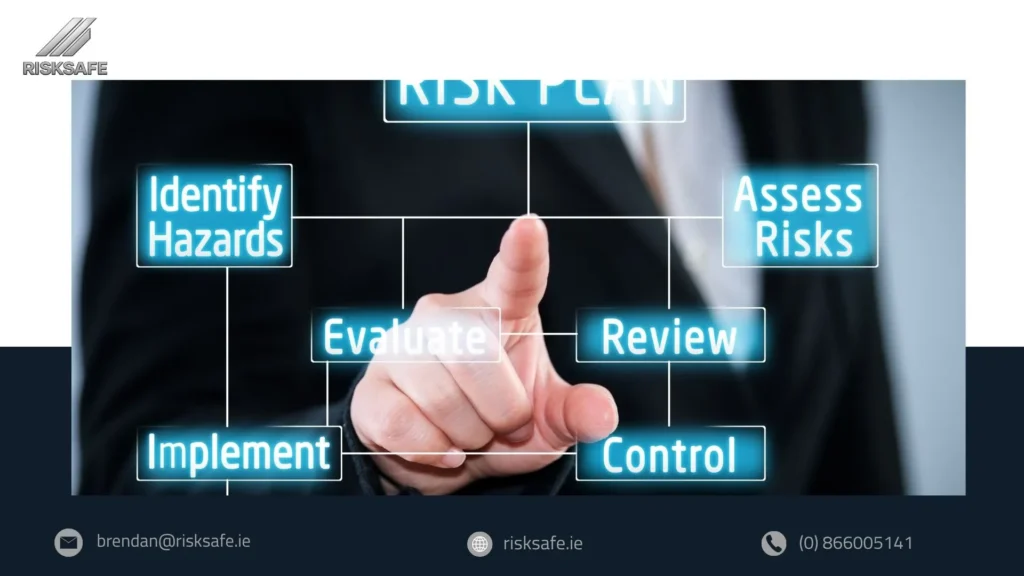
The plan should answer a practical question: what happens when a control is not achieved?
Possible failures include:
- Temperatures outside the required criteria.
- Missed flushing.
- Discolouration, odour or poor flow.
- Inaccessible tanks or plant rooms.
- Damaged insulation.
- Incomplete maintenance.
- Stagnant or vacant areas missing from the schedule.
- Contractor reports not received.
- Recommended work remaining overdue.
- A change to the system not reflected in the assessment.
Each failure should have an escalation route. Depending on the issue, the response may include repeating a check, restricting use, arranging maintenance, seeking competent advice or reviewing the risk assessment.
Effective legionella control measures Ireland do not end when a problem is recorded. The plan should identify who investigates it, who approves the response and how completion is verified.
Step 6: Keep Records That Management Can Use
Records provide evidence that the plan is operating, but their value comes from review rather than storage.
Useful legionella control records Dublin may include:
- The current risk assessment.
- The water-system schematic.
- The control plan and revision history.
- Appointment of the responsible person and deputy.
- Monitoring schedules.
- Temperature results.
- Flushing records.
- Tank and equipment inspections.
- Cleaning, treatment and servicing reports.
- Sampling results where sampling is appropriate.
- Reported failures.
- Corrective-action logs.
- Contractor attendance records.
- Evidence that recommendations were completed.
Records should identify the location, date, result and person completing the task. Repeated gaps, copied entries or unexplained abnormal readings should be investigated.
A useful legionella monitoring programme Ireland should make trends visible. If the same outlet repeatedly fails, management should examine the underlying cause rather than continue recording the same exception.
Step 7: Review the Plan When the Building Changes
The control plan should remain connected to the real building. Review may be required when:
- Water-system equipment or pipework changes.
- Floors, rooms or units become vacant.
- Occupancy increases or decreases.
- A new tenant or contractor takes over.
- Responsibilities change.
- Monitoring indicates loss of control.
- Maintenance reveals a system defect.
- A contamination concern or adverse result occurs.
- The current assessment no longer reflects the premises.
- Corrective actions remain incomplete.
RiskSafe’s guide to Legionella risk assessment review frequency explains why significant changes and control failures may require action before the next planned review date.
Every revised legionella control plan Ireland should show the version, review date, changes made and person approving the update.
Legionella Control Plan Versus Water Safety Plan
The terms may overlap, but they should not automatically be treated as identical.
A Legionella control plan focuses specifically on identifying and controlling Legionella risks. A broader water safety plan Dublin may address additional water quality, infection-control, operational and emergency considerations.
This distinction can be particularly important in healthcare or other higher-risk environments. The National Guidelines for the Control of Legionellosis in Ireland provide national guidance, while specialist healthcare guidance may impose additional expectations for particular settings.
Organisations should define which document they are using, what it covers and how the individual procedures interact.
Making the Plan Work Across Shared Premises
Shared buildings require clear cooperation between landlords, managing agents, tenant employers and contractors.
A legionella management plan Dublin for a shared property may divide responsibilities between central systems and tenant-controlled areas. The landlord might manage tanks and main distribution pipework, while tenants flush outlets and report low-use rooms within their units.
The plan should state:
- Where one party’s responsibility ends and another begins.
- How monitoring results are shared.
- Who manages common areas.
- How vacant units are controlled.
- Who updates the outlet register.
- How urgent defects are communicated.
- Who confirms remedial work is complete.
Contract wording should support the plan, but daily responsibilities must also be understood by the people performing them.
Common Control Plan Weaknesses
A plan may look complete but still fail in practice. Common weaknesses include:
- Copying a generic template.
- Using outdated drawings.
- Listing controls without naming responsible people.
- Recording results without reviewing them.
- Allowing contractor recommendations to remain open.
- Ignoring vacant or low-use areas.
- Failing to update schedules after occupancy changes.
- Treating water testing as a replacement for risk assessment.
- Keeping records in several unconnected locations.
- Failing to define escalation procedures.
A weak legionella control plan Ireland describes activity. A strong plan creates accountability and shows what happens when expected conditions are not achieved.
Frequently Asked Questions
-
Does Every Building Need the Same Control Plan?
No. The plan should reflect the building’s systems, use, occupancy and risk assessment. A simple workplace may need a proportionate plan, while complex or higher-risk premises require more detail.
-
Who Should Write the Plan?
A competent person should help develop the controls, while the responsible person and management ensure they are implemented. External support may be appropriate where internal competence is limited.
-
Is Water Sampling Required in Every Plan?
No. Sampling may be appropriate in specific circumstances, but it does not replace risk assessment, temperature control, maintenance or active management.
-
How Long Should Records Be Kept?
The appropriate retention period depends on the record, applicable guidance and organisational requirements. The plan should specify how records are stored, protected and retrieved.
-
Can a Contractor Manage the Entire Programme?
A contractor can complete defined technical and monitoring tasks. The organisation should still review reports, assign corrective actions and maintain oversight of the complete programme.
-
When Should a Plan Be Updated?
Update it when systems, occupancy, responsibilities or controls change, or when monitoring suggests the existing arrangements are no longer effective.
Turn the Risk Assessment Into Daily Control
A practical legionella control plan Ireland connects the risk assessment with real actions, responsible people, monitoring schedules, records and corrective work.
RiskSafe provides professional Water Risk Assessments Dublin for businesses, landlords, property managers and organisations. The assessment can identify water-system hazards, management gaps and the controls that should be considered for the premises.
Contact RiskSafe to discuss your building, current documentation and the appropriate assessment scope.