A wet entrance on a rainy morning, a cable across a walkway, a damaged stair edge, or a delivery left in the wrong place can turn an ordinary working day into an injury. That is why a slips trips and falls risk assessment Ireland should look beyond obvious hazards and examine how people move through a workplace.
For employers, managers, landlords, and facilities teams in Dublin, Ireland, slips trips and falls Dublin risks can change daily. Weather, cleaning, deliveries, foot traffic, maintenance, stock movement, and temporary work can all alter conditions. A surface that is safe at 9 a.m. may become hazardous by lunchtime.
This RiskSafe guide explains how to assess workplace slips and trips Dublin, identify recurring causes, choose proportionate controls, and connect findings to wider health and safety management without turning this article into a service page.
Start With the Route People Really Use
A useful assessment begins by walking the routes employees, visitors, contractors, and delivery drivers actually use. Do not rely only on floor plans or the route management expects people to take.
The Health and Safety Authority says slips, trips, and falls are a significant workplace injury issue and provides a systematic approach to slip risk assessment and prevention. Its guidance recommends identifying manageable areas such as entrances, bathrooms, corridors, stairs, work areas, and pedestrian surfaces, then assessing the particular risks in each location.
For a slip trip risk assessment Dublin, useful questions include: Where do people change direction? Where do queues form? Where do workers carry objects that block their view? Where does rainwater enter? Are shortcuts used? Are bins, pallets, cables, or stock regularly placed in walking routes?
The point is to assess behaviour and conditions together.
What Irish Workplace Rules Say About Walking Surfaces
Irish workplace requirements are not limited to telling employees to “watch their step.” HSA guidance summarising the General Application Regulations states that pedestrian surfaces should be clean, fixed, stable, not slippery, and free from dangerous bumps, holes, or slopes. The wider legal framework also requires safe access, safe systems of work, training, risk assessment, and a Safety Statement.
That makes slips trips and falls risk assessment Ireland a management issue, not a housekeeping slogan. If a hazard is predictable and recurring, repeatedly placing a warning sign beside it may not be a sufficient long-term control.
Dublin employers should ask whether the surface, cleaning method, drainage, access route, lighting, footwear, or work process can be improved instead.
Wet Floors: Fix the Cause Before Reaching for a Sign
Wet surfaces are one of the most familiar slips trips and falls Dublin hazards, particularly around entrances, kitchens, washrooms, cleaning areas, and places where liquids are handled.
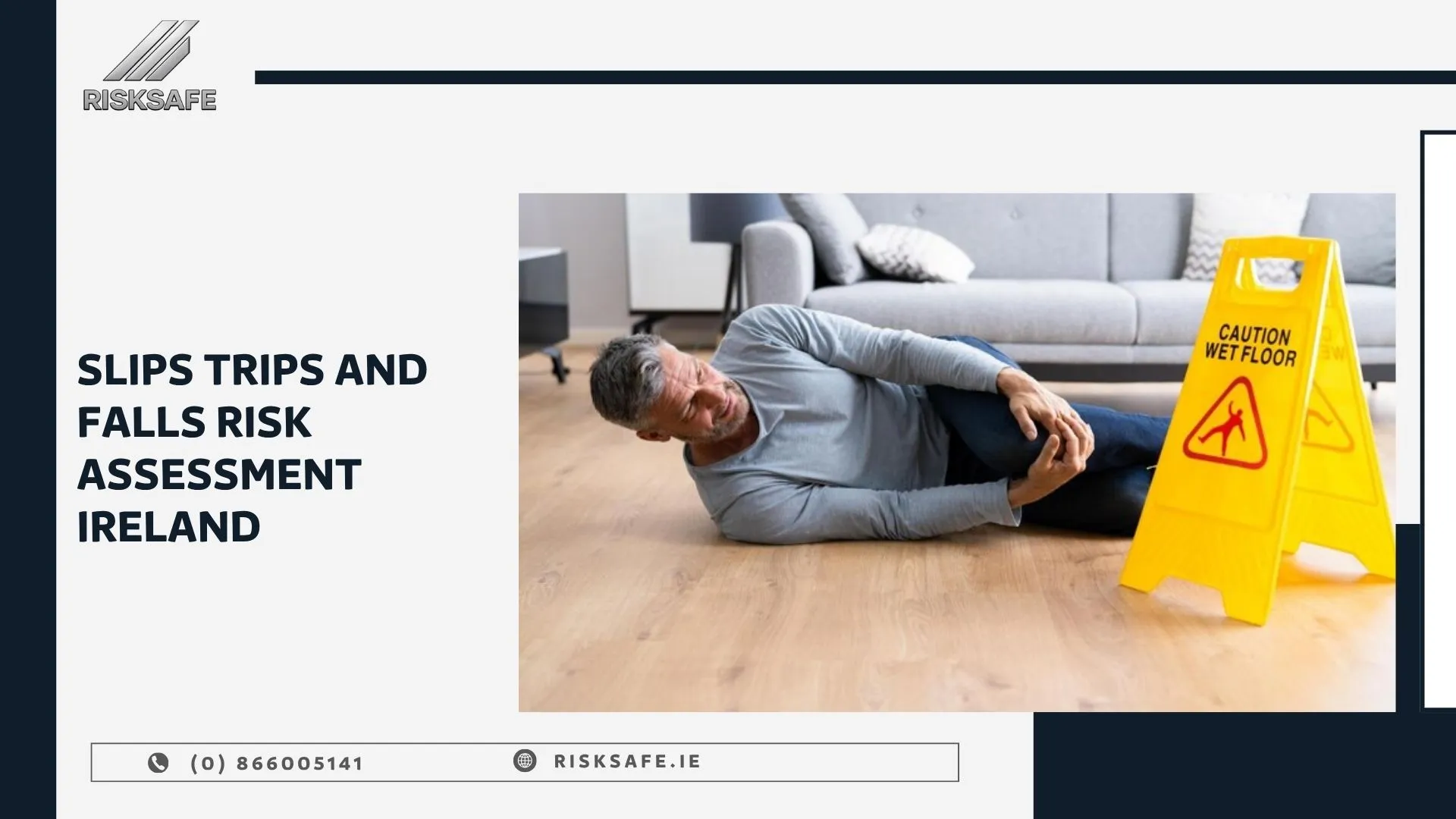
A yellow sign may warn someone that a hazard exists, but it does not remove the hazard. HSA guidance on wet cleaning says signs alone were ineffective in preventing all slips, trips, and falls on wet floors and advises segregation where wet cleaning creates a risk.
For a busy Dublin workplace, stronger controls may include changing cleaning times, cleaning smaller areas in stages, cordoning wet areas, improving entrance matting, repairing leaks, changing the cleaning method, improving drainage, or selecting a more suitable floor finish.
A good workplace fall prevention Dublin approach asks why the floor becomes wet and how long the exposure lasts.
Entrances Deserve Their Own Risk Assessment
Entrances can change quickly when Dublin weather brings rain, mud, or moisture indoors. A mat that is too small, curled, saturated, or poorly positioned can create a new trip hazard instead of solving the original slip problem.
During a slips trips falls checklist Ireland review, inspect the full entrance journey: outside approach, threshold, matting, floor transition, reception area, stairs, and the route people take after entering.
The HSA advises employers to consider pedestrian access, peak times, unfamiliar users, shortcuts, clearly marked routes, and additional controls at entrances during rain.
Trips Often Start With Ordinary Objects
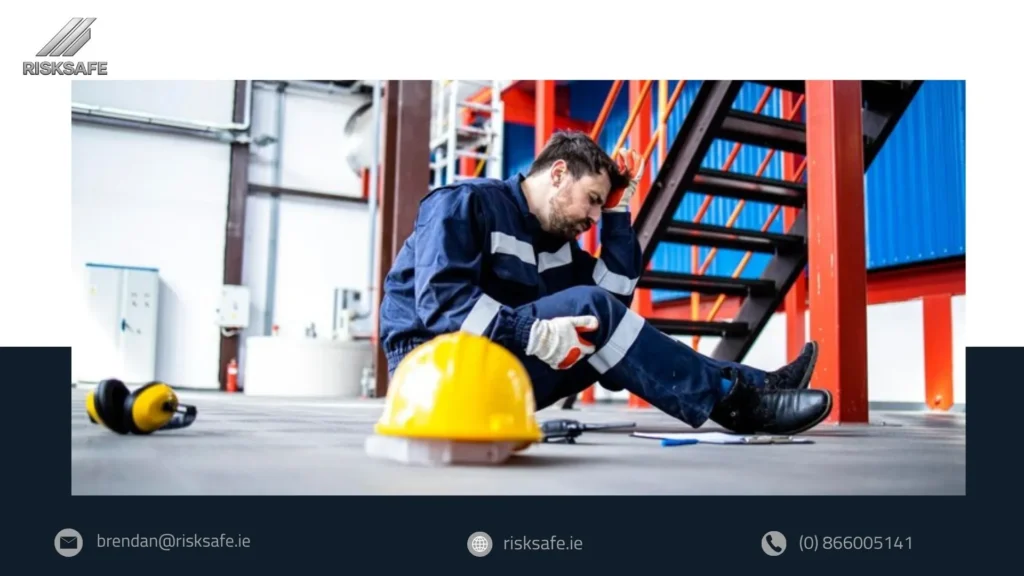
Trip hazards are often mundane: extension leads, packaging, boxes, open drawers, loose mats, tools, hoses, stock, broken paving, or uneven floor transitions.
The danger is that familiarity makes them invisible. Staff may step around the same cable for months until someone carrying a large object cannot see it.
An effective slip trip risk assessment Dublin should therefore look at storage, cable management, maintenance, temporary work, delivery practices, and whether walkways remain clear during busy periods.
Housekeeping matters, but the solution should not stop at telling employees to tidy up. If there is nowhere suitable to store delivery cages, tools, or waste, the problem may be workplace design or work organisation rather than individual behaviour.
Stairs Need More Than a Quick Visual Check
Falls on stairs can produce more serious consequences than a same-level trip. HSA guidance identifies descending stairs and steps as a significant factor in workplace incidents and highlights operational controls, environmental conditions, hazardous steps, and suitable handrails as important considerations.
A falls risk assessment workplace Ireland should examine whether step dimensions are consistent, edges are visible, handrails can be gripped, lighting is adequate, surfaces provide suitable traction, and employees are expected to carry loads that interfere with balance or handrail use.
For Dublin multi-storey offices, retail premises, hotels, and apartment-related workplaces, stair safety deserves a separate section rather than one checkbox labelled “stairs okay.”
Cleaning Can Prevent Slips or Create Them
Cleaning only controls risk when the method suits the surface and contamination. Too little cleaning leaves residues; too much water or the wrong product can create a temporary slip hazard.
When reviewing workplace slips and trips Dublin, speak with cleaners as well as managers. Ask where contamination repeatedly appears, whether equipment is suitable, whether access can be restricted during wet cleaning, and whether floors are left ready for normal pedestrian use.
Do Not Forget Car Parks, Yards, and Outdoor Routes
A risk assessment that ends at the front door is incomplete.
External routes can include potholes, broken paving, drainage problems, kerbs, ramps, loading areas, poorly lit paths, leaves, moss, ice, and interactions with vehicles. HSA guidance identifies entrances, exits, walkways, uneven surfaces, ice, vehicles, and outdoor areas among common factors in slips, trips, and falls across several sectors.
Use Near Misses to Find Hazards Before an Injury
Near misses can strengthen a slips trips and falls risk assessment Ireland. If someone nearly falls on a wet stair or trips over a delivery cage, review the location before the same condition causes harm. Repeated reports around one entrance or walkway may reveal a recurring design, cleaning, storage, or maintenance problem.
Build Controls Around the Hierarchy, Not Habit
When a hazard is found, ask whether it can be removed. If not, reduce exposure through engineering or organisational changes before relying on warnings and individual vigilance.
For example, repair a damaged floor instead of painting around it. Reroute a cable instead of taping it indefinitely. Fix a leak instead of placing a bucket underneath. Change delivery storage instead of asking workers to squeeze around pallets.
For workplace fall prevention Dublin, practical controls are stronger when they remain effective on a busy day, during staff absence, and when a visitor unfamiliar with the premises uses the route.
Connect Findings to a Wider Health and Safety Audit
This article is designed to answer an informational search about slips trips and falls risk assessment Ireland. It should not compete with RiskSafe’s commercial audit page.
Where a Dublin organisation wants a broader review of workplace arrangements, Health and Safety Audits Dublin is the main internal service page. An audit can consider risk assessments, housekeeping, workplace layout, incident trends, action tracking, training records, and other management controls within the agreed scope.
The distinction is useful: this guide helps readers understand one hazard category, while the service evaluates the wider safety management picture.
Where Other RiskSafe Services Fit
Some findings overlap with other risks. An escape-route problem may justify review through Fire Risk Assessments Dublin. If someone loses balance while lifting, carrying, pushing, or pulling, the handling task should also be assessed; where training is appropriate, RiskSafe provides Manual Handling Training Dublin. Facilities teams can separately access Water Risk Assessments Dublin for water-system and Legionella risks.
A Slips Trips Falls Checklist Ireland Employers Can Use
During a workplace walk-through, review entrances, corridors, stairs, washrooms, kitchens, storage areas, workstations, loading areas, yards, and car parks.
Ask whether surfaces are stable and even, spills are controlled quickly, cleaning methods create temporary risks, mats are suitable, cables cross routes, lighting is adequate, handrails are usable, footwear matches the hazard, and walkways remain clear.
Check whether defects have owners and deadlines. Review accident and near-miss records for repeated locations. Observe the workplace during busy conditions rather than only when it is quiet.
A slips trips falls checklist Ireland works best when it leads to action, not when every box is automatically marked “satisfactory.”
Frequently Asked Questions
-
What should a slips trips and falls risk assessment Ireland include?
It should identify where people walk, the condition of surfaces, contamination, stairs, lighting, housekeeping, footwear, behaviour, access routes, outdoor areas, and relevant work activities. Controls should be proportionate to the risk and reviewed when conditions change.
-
Are wet floor signs enough?
Not always. HSA guidance indicates that signs alone may not adequately control risk from wet cleaning. Preventing contamination, restricting access, changing cleaning methods, or improving surfaces may provide stronger controls.
-
Who should report slip and trip hazards?
Employees should report hazards they notice, while employers remain responsible for managing workplace risks. Clear reporting routes help defects, spills, and recurring problems reach the person who can act.
-
Should stairs be assessed separately?
Yes. Stairs have specific factors including step dimensions, visual contrast, handrails, lighting, surface condition, and activities carried out while using them. HSA provides dedicated guidance for safer stairs and steps.
-
How often should the assessment be reviewed?
Review should follow changes in conditions, incidents, near misses, workplace layout, surfaces, cleaning methods, work activities, or other factors that may affect risk. A fixed calendar date should not be the only trigger.
Make the Safe Route the Easy Route
The best slips trips and falls risk assessment Ireland does not depend on everyone remembering to be careful every second of the day. It designs work so the normal route is clear, stable, dry where reasonably practicable, well maintained, and easy to use.
For employers and facilities teams in Dublin, Ireland, that means observing real work, fixing recurring causes, tracking defects, learning from near misses, and reviewing changes before they create new hazards.
RiskSafe supports Dublin organisations through Health and Safety Audits Dublin, where workplace conditions and management controls can be considered as part of a wider audit. Keep this article focused on slip trip risk assessment Dublin and prevention, and keep the commercial audit intent on the dedicated service page.