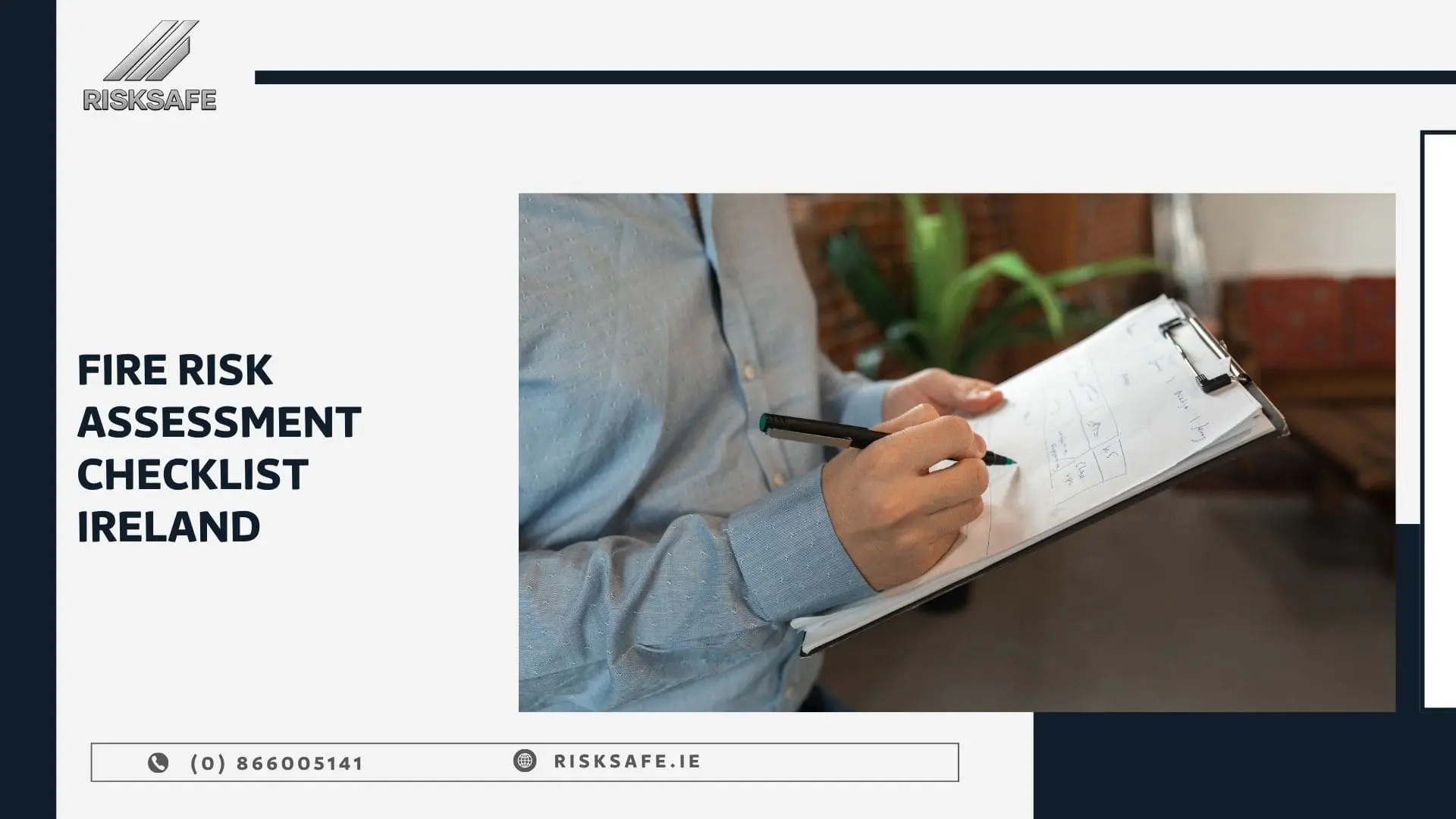
A Fire Risk Assessment Checklist Ireland employers should examine how a fire could start, which fuels may help it spread, who could be harmed, whether warning systems are suitable, and how everyone would escape safely. It should also review fire doors, emergency lighting, extinguishers, staff training, maintenance records, evacuation procedures, and outstanding corrective actions.
For businesses, landlords, and property managers in Dublin, completing a checklist is only the beginning. A professional assessment from Risksafe turns observations into a prioritised action plan tailored to the premises. Risksafe helps organisations identify fire hazards, review existing precautions, strengthen emergency arrangements, and make improvements.
What Is a Fire Risk Assessment?
A fire risk assessment is a structured examination of premises, activities, occupants, and existing fire safety measures. It considers the likelihood of fire, the possible consequences, the people most at risk, and whether current controls are adequate.
The Health and Safety Authority explains that employers must identify hazards, assess risks, maintain written risk assessments, and record them in the Safety Statement. Its fire guidance states that a fire safety risk assessment should cover fire prevention, detection and warning, emergency escape, and firefighting arrangements.
A Fire Safety Risk Assessment Ireland businesses must therefore reflect the building’s real use. An office, restaurant, warehouse, clinic, hotel, school, retail unit, and apartment development may have very different ignition sources, combustible materials, occupancy patterns, and evacuation challenges.
Quick Fire Risk Assessment Checklist Ireland
Use this summary to begin reviewing your Dublin premises:
- Identify sources of heat, sparks, flames, and electrical ignition.
- Identify combustible materials, flammable liquids, gases, waste, and storage.
- Consider employees, visitors, contractors, customers, tenants, and vulnerable occupants.
- Check fire detection, alarm coverage, testing, and warning arrangements.
- Confirm escape routes are adequate, visible, unlocked, and unobstructed.
- Review fire doors, compartmentation, signage, and emergency lighting.
- Check extinguishers and other firefighting equipment are suitable and maintained.
- Review evacuation plans, assembly points, fire wardens, and drills.
- Examine inspection, servicing, training, and corrective action records.
- Assign every required improvement to a responsible person and deadline.
This Fire Risk Assessment Checklist Ireland summary is useful for internal checks, but complex premises or uncertain findings may require competent professional assessment.
Step 1: Identify Possible Sources of Ignition
The first part of a Fire Hazards Checklist should identify anything capable of providing heat or ignition. Common sources include cooking appliances, heaters, electrical installations, overloaded sockets, damaged cables, machinery, hot work, smoking, naked flames, battery charging, and poorly maintained equipment.
Employers should look beyond obvious flames. Heat can build up around electrical equipment, ventilation systems, motors, lighting, chargers, and process machinery. Contractors may introduce temporary ignition risks through welding, cutting, soldering, roofing work, or portable equipment.
The assessment should record where each source is located, who controls it, how it is maintained, and whether it is separated from combustible material.
Step 2: Identify Fuel and Combustible Materials
A fire needs fuel as well as ignition. Paper, cardboard, packaging, furniture, textiles, stock, waste, cleaning products, oils, gases, plastics, and flammable liquids may allow fire to start or spread.
Storage arrangements matter. Combustible items placed near heaters, electrical panels, cooking equipment, or charging stations can increase risk. Waste accumulation, blocked plant areas, overfilled stores, and unmanaged deliveries may create additional fire loading.
A workplace fire risk assessment checklist should consider quantities, locations, storage conditions, waste removal, and separation from heat.
Step 3: Identify People Who May Be at Risk
The next stage of the Fire Risk Assessment Checklist Ireland process is identifying everyone who could be affected. This includes employees, customers, visitors, contractors, tenants, delivery drivers, and members of the public.
Some people may require additional consideration, including those with disabilities, reduced mobility, sensory impairments, limited English, unfamiliarity with the premises, or responsibility for children or patients. Lone workers, night staff, new employees, and people working in remote areas may also face different risks.
The assessment should consider where people work, sleep, receive care, gather, or pass through the building. It should also examine how quickly they could recognise an alarm and reach safety.
Step 4: Review Fire Detection and Warning
A suitable warning system should alert everyone early enough to escape. The type and coverage needed depend on the premises, layout, occupancy, noise levels, work activities, and whether people sleep or receive care there.
Check alarm call points, detectors, sounders, visual warnings where required, control panels, zoning, and communication procedures. Records should show routine user tests, servicing, faults, repairs, and actions taken.
A fire safety checklist Ireland employers use should not treat the presence of an alarm as sufficient. The system must remain appropriate, operational, audible or otherwise perceivable, and supported by clear procedures.
Step 5: Examine Escape Routes and Exits
People should be able to follow a recognizable route to a place of safety, regardless of where a fire begins. Escape routes need sufficient width, suitable protection, clear direction, adequate lighting, and doors that can be opened without delay.
During a workplace fire safety inspection, check corridors, stairs, final exits, fire doors, external routes, assembly points, and access for emergency services. Remove storage, furniture, waste, or deliveries that narrow or obstruct the route.
Emergency exits should not be locked in a way that prevents immediate escape while the premises is occupied. Any proposed changes to escape arrangements should receive appropriate professional and fire authority consideration.
Step 6: Check Fire Doors and Compartmentation
Fire doors and fire-resisting construction can restrict smoke and flame, protecting escape routes and slowing spread. Their performance can be undermined by damage, missing seals, unsuitable glazing, wedging, defective closers, or unprotected openings.
Check whether doors close fully, fit correctly, display appropriate signs, and remain free from obstruction. Examine walls, ceilings, service penetrations, ducts, and risers for gaps that could allow smoke or fire to pass.
A professional Fire Safety Risk Assessment Ireland service can help identify visible concerns and recommend when a specialist investigation is required.
Step 7: Review Emergency Lighting and Signs
If normal lighting fails, occupants still need to find exits and navigate changes of level, corridors, stairs, equipment areas, and external routes safely. Emergency lighting should suit the premises and receive appropriate testing and maintenance.
Fire exit signs should be clearly positioned, consistent, visible, and understandable. Firefighting equipment and alarm points may also require signs.
Your Fire Risk Assessment Checklist Ireland should verify that signs direct people along the complete route rather than stopping at an internal doorway. Records should show tests, defects, repairs, and servicing.
Step 8: Assess Firefighting Equipment
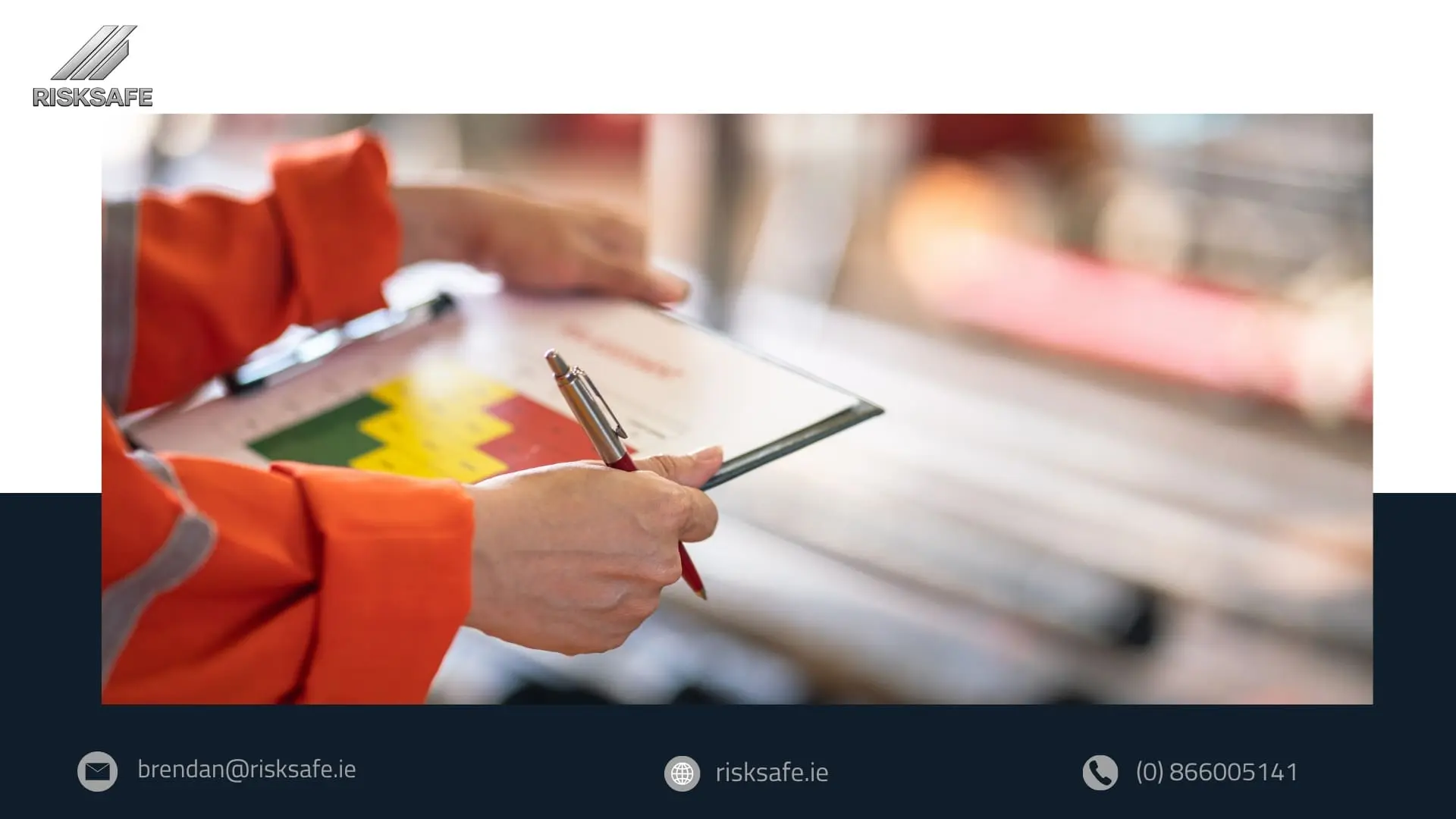
Extinguishers, fire blankets, hose reels, or other equipment should be suitable for the identified risks, accessible, correctly located, clearly marked, and maintained.
Equipment is mainly intended for trained occupants to tackle a small fire only when it is safe and there is a clear escape route. Employees should never be placed under pressure to fight a fire.
The assessment should review equipment type, location, condition, servicing records, access, and staff instruction. It should also check whether changes in activities or materials require different provisions.
Step 9: Review Evacuation Procedures and Training
Employers should have clear emergency plans covering alarm activation, emergency calls, evacuation, assistance for people who need support, assembly, roll calls, liaison with emergency services, and restrictions on re-entry.
Fire wardens and other responsible people should understand their roles. Employees need information and training suited to their responsibilities, workplace, and specific needs.
Fire drills help test whether arrangements work in practice. Records should capture the date, participants, time taken, problems observed, and corrective actions.
Step 10: Check Records and Ongoing Management
Good fire safety depends on continuing management, not a once-yearly form. Keep records of alarm tests, emergency lighting checks, extinguisher servicing, fire door inspections, drills, training, maintenance, incidents, contractor work, and completed actions.
The workplace fire risk assessment checklist should identify who manages each system and how often checks occur. Responsibilities must remain current when managers, tenants, contractors, or service providers change.
For wider documentation and compliance preparation, read Risksafe’s HSA Inspection Checklist and Safety Statement Ireland guide. The article on Risk Assessment vs Safety Statement also explains how individual assessments connect to the employer’s overall safety programme.
When Should a Fire Risk Assessment Be Reviewed?
Review the assessment regularly and whenever there is reason to believe it may no longer be valid. Triggers can include building alterations, changes in layout or occupancy, new equipment, different materials, increased stock, new tenants, altered working hours, or revised evacuation arrangements.
Review is also appropriate after a fire, alarm activation, near miss, inspection finding, drill problem, or concern raised by an employee or occupant.
A Fire Risk Assessment Checklist Ireland should therefore include a review date but should not encourage managers to wait for that date when significant change occurs.
Common Fire Safety Mistakes in Dublin Workplaces
Common problems include blocked exits, wedged fire doors, unmanaged combustible storage, incomplete alarm records, outdated evacuation plans, missing drill evidence, and maintenance actions left open.
Other weaknesses include treating a certificate as proof that current operations are safe, failing to consider contractors, and using a generic Fire Hazards Checklist that does not reflect the premises.
Risksafe helps Dublin clients distinguish urgent risks from planned improvements, making the resulting report easier to manage and budget.
How Risksafe Supports Dublin Businesses
Risksafe provides professional Fire Risk Assessments Dublin for businesses, landlords, property managers, and organisations that need clear findings and realistic recommendations.
The assessment may review ignition sources, fuels, occupants, escape routes, alarms, emergency lighting, fire doors, extinguishers, evacuation arrangements, training, testing, and records. Following the visit, Risksafe provides practical recommendations that help management understand what should be addressed, why it matters, and which actions require priority. This is more valuable than completing a Fire Risk Assessment Checklist Ireland without professional interpretation.
Other Risksafe Services
Risksafe also provides Health and Safety Audits Dublin to examine workplace documentation, risk controls, training, procedures, and inspection readiness.
Water Risk Assessments Dublin help organisations manage water system and Legionella-related risks. Manual Handling Training Dublin gives employees practical instruction for relevant lifting, carrying, pushing, and pulling tasks.
Explore all Risksafe services to combine fire, water, workplace compliance, and staff training support.
Book a Fire Risk Assessment With Risksafe
A Fire Safety Checklist Ireland managers complete internally can reveal visible concerns, but it may not establish whether precautions are suitable for the building, occupants, and activities.
Risksafe offers Dublin-based support focused on practical risk reduction, clear reporting, and manageable next steps. Whether you operate an office, shop, restaurant, warehouse, clinic, school, hospitality premises, or managed property, the service is adapted to your environment.
Contact Risksafe to arrange a professional assessment and turn your Fire Risk Assessment Checklist Ireland findings into a prioritised improvement plan.
Frequently Asked Questions
-
Is a Fire Risk Assessment Required for Irish Workplaces?
Irish employers must identify hazards, assess risks, and hold written risk assessments. HSA guidance states that a fire safety risk assessment should be conducted and recorded within the Safety Statement.
-
Who Is Responsible for Fire Safety in a Building?
Responsibility can involve employers and persons having control over premises, depending on ownership, occupation, leasing, management, and workplace arrangements. Duties should be clarified rather than assumed.
-
How Often Should a Workplace Fire Safety Inspection Be Completed?
Routine checks should follow the risks, systems, manufacturer guidance, service requirements, and workplace procedures. The full assessment should be reviewed after significant change, an incident, or evidence that it may no longer be valid.
-
Can Risksafe Assess Small Dublin Businesses?
Yes. Risksafe supports small businesses as well as larger, shared, and multi-area premises. Recommendations are proportionate to the building’s use, complexity, occupancy, and identified risks.
-
Does Completing a Checklist Replace a Professional Assessment?
Not always. A checklist supports internal monitoring, but complex buildings, unclear escape arrangements, vulnerable occupants, fire safety defects, or major changes may require competent professional input.
-
What Happens After Risksafe Completes the Assessment?
Risksafe provides clear findings and practical recommendations. Management can then assign responsibilities, set deadlines, prioritise urgent actions, retain completion evidence, and schedule future reviews.