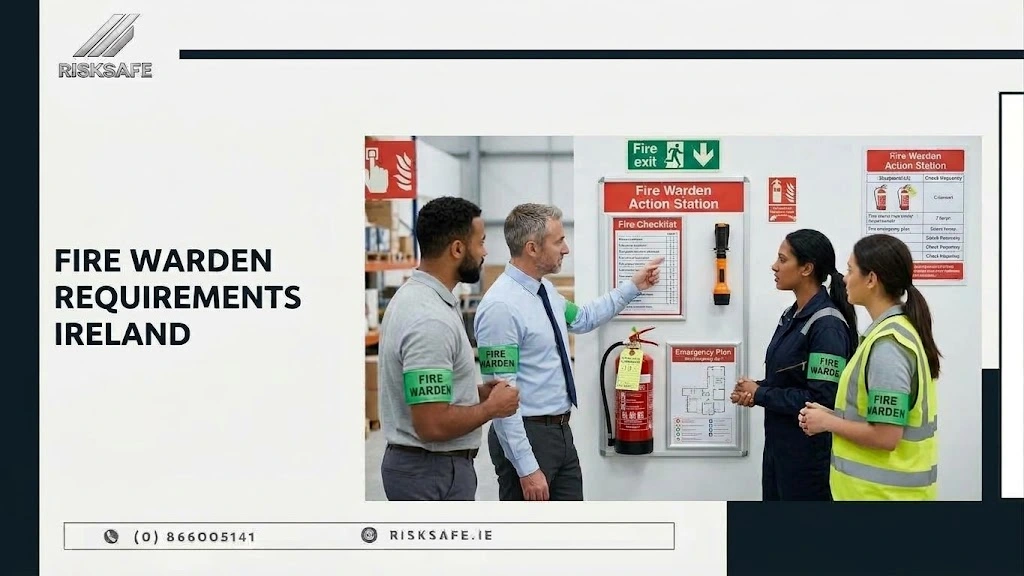
The alarm sounds during a busy day. An employee heads for the exit, a visitor waits for instructions and a manager tries to remember whether the upstairs meeting room is occupied. The first few minutes reveal whether the emergency plan works.
This is why employers search for fire warden requirements Ireland guidance. They want to know whether a warden must be appointed, what that person should do and how many trained people the workplace needs. The answer is not based on a standard job title or one number for every building. It depends on the emergency arrangements required for the premises and the people designated to implement them.
This guide explains the legal position, practical fire warden duties Ireland workplaces should define and how to build dependable cover.
Is a Fire Warden Required in Ireland?
The most accurate answer to is a fire warden required in Ireland is that Irish legislation does not simply state that every workplace must appoint someone with that exact title. It does, however, require employers to prepare adequate emergency plans and procedures and to designate employees to implement them.
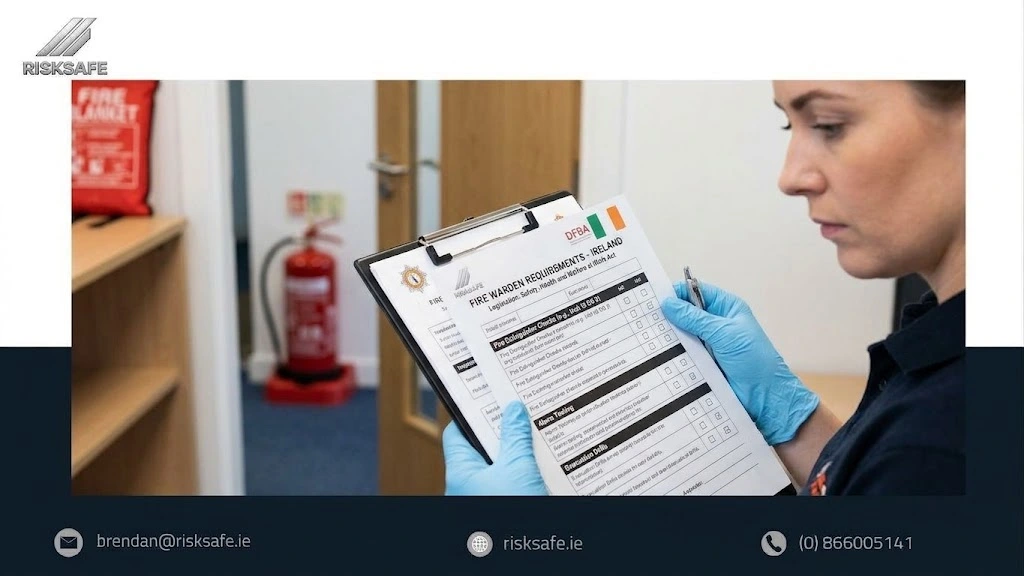
Section 11 of the Safety, Health and Welfare at Work Act 2005 requires employers to provide measures appropriate to the workplace for fire-fighting and evacuation. It also requires the employer to ensure that the number of designated employees, their training and the equipment available to them are adequate, taking account of the size and specific hazards of the workplace.
Many organisations call these designated employees fire wardens or fire marshals. A business should be able to demonstrate that suitable people understand their responsibilities and can support the plan whenever the premises is occupied.
Therefore, when someone asks is a fire warden required in Ireland, the practical response is: your workplace needs adequate arrangements and designated, appropriately prepared employees to implement them. Whether those people are called wardens, marshals or emergency coordinators should be decided and documented clearly.
Fire Warden or Fire Marshal: Is There a Difference?
The terms are often interchangeable. Some organisations use “fire marshal” for the overall coordinator and “fire warden” for employees responsible for particular floors or zones.
Written fire marshal responsibilities Ireland businesses adopt should specify who raises the alarm, contacts emergency services, checks defined areas when safe, assists with evacuation and receives information at the assembly point. Employees must know whose instructions to follow and where each role ends.
Fire Warden Duties Before an Emergency
Effective wardens do not wait for smoke or an alarm before becoming involved. Important fire warden duties Ireland workplaces may assign during normal operations include:
- Remaining familiar with escape routes, final exits and assembly arrangements.
- Identifying blocked routes, wedged fire doors or inaccessible fire-fighting equipment.
- Knowing how the alarm is raised and how warnings are communicated.
- Understanding the areas, floors or departments assigned to them.
- Being aware of agreed arrangements for visitors, contractors and people requiring assistance.
- Taking part in drills and reporting weaknesses observed.
- Knowing how absences and shift changes affect warden cover.
- Reporting concerns through the workplace’s fire safety management process.
A warden is not normally expected to perform specialist maintenance unless separately trained and authorised. Fire safety equipment still needs appropriate testing and servicing.
RiskSafe’s articles on fire alarm testing frequency in Ireland and emergency lighting testing frequency in Ireland explain why routine workplace checks and competent servicing should not be confused with the warden’s evacuation role.
Fire Warden Duties When the Alarm Sounds
During an emergency, the priority is safe evacuation—not protecting property or investigating beyond the agreed procedure. Depending on the premises and plan, fire warden duties Ireland employers assign may include:
- Following the agreed method for raising or confirming the alarm.
- Encouraging people to leave immediately by an available safe route.
- Directing occupants away from lifts or unsuitable routes where relevant.
- Checking an assigned area only when the procedure requires it and it is safe to do so.
- Closing doors where practicable without delaying escape.
- Supporting agreed arrangements for people who may require assistance.
- Proceeding to the assembly point without unnecessary delay.
- Reporting relevant information to the person coordinating the evacuation.
A warden should never enter smoke, delay their escape or assume a room is safe to search. Firefighting should only be considered where the plan permits it, suitable equipment is available, appropriate instruction has been provided and escape remains safe.
The Health and Safety Authority’s guidance on emergency escape and fire fighting emphasises that emergency procedures must be in place and practised, and that everyone should be able to reach a place of safety.
Responsibilities at the Assembly Point
Evacuation does not end outside. Missing information, visitors and unauthorised re-entry can create confusion at the assembly point.
Depending on the plan, fire marshal responsibilities Ireland organisations define may include receiving reports from individual wardens, helping account for employees and visitors, passing information to the emergency services and preventing occupants from returning before permission is given.
Wardens should report facts rather than re-enter the building. If somebody may be missing, that information must be given promptly to the emergency services together with the person’s likely location. Employees should never be sent back inside to investigate.
The assembly procedure, reporting structure and arrangements for accounting for people should be included in the workplace’s fire evacuation plan.
How Many Fire Wardens Do I Need?
There is no universal answer to how many fire wardens do I need based only on total employee numbers. Section 11 requires the number of designated employees to be adequate for the size and hazards of the workplace. The decision should therefore come from the fire risk assessment and emergency plan.
Factors influencing warden numbers include:
- The number of floors, buildings, departments and evacuation zones.
- Building layout, travel distances and the complexity of escape routes.
- Maximum occupancy rather than only the number of permanent employees.
- Visitors, customers, contractors or residents unfamiliar with the premises.
- Shift work, hybrid working, holidays, sickness and off-site duties.
- Lone or isolated working areas.
- People who may require assistance during evacuation.
- Higher-risk processes, equipment or stored materials.
- Whether separate entrances, tenancy areas or assembly points are used.
When asking how many fire wardens do I need, employers should also consider resilience. Appointing one person for a workplace creates an obvious gap whenever that person is absent. Adequate deputies or coverage across shifts may be more important than the headline number of names on a list.
A Risk-Based Approach to Warden Coverage
| Workplace | Coverage questions to consider |
| Small single-floor office | Who provides cover during leave, meetings or remote-working days? |
| Multi-floor commercial building | Does every floor or evacuation zone have dependable cover? |
| Retail or hospitality premises | How will staff direct customers and account for changing occupancy? |
| Warehouse | Are remote areas, noise, machinery and long travel distances addressed? |
| Managed or shared building | Are landlord, tenant and facilities responsibilities coordinated? |
| Shift-based workplace | Is sufficient cover available on every shift, including nights and weekends? |
This table is not a staffing formula. It demonstrates why fire warden requirements Ireland organisations apply must reflect how the premises is actually used.
Choosing Suitable Fire Wardens
Selecting the nearest manager is not always the best solution. A suitable warden should be regularly present, understand the workplace, recognise the alarm, know the available routes, communicate clearly and report accurately at the assembly point. The person must receive information and training appropriate to the role. Adding a name to the Safety Statement alone does not establish competence.
Fire Drills Test the Arrangement, Not Just the Alarm
A drill should reveal whether wardens know their areas, employees respond promptly, escape routes work and assembly-point information reaches the coordinator. It should also test what happens when the usual warden is absent.
Record delayed reactions, unsuitable use of exits, unmonitored areas and unclear assembly-point reporting. Findings should lead to corrective action, not only an evacuation time.
RiskSafe’s guide to fire drill frequency in Ireland explains how drills can be planned, recorded and reviewed according to workplace risk and change.
Connecting Wardens to the Fire Risk Assessment
Warden arrangements cannot be designed in isolation. Escape routes, fire doors, alarm coverage, emergency lighting, occupancy and the needs of people requiring assistance all affect whether the plan is workable.
A professional Fire Risk Assessment Dublin can review fire hazards, people at risk, means of escape, warning arrangements and existing evacuation procedures. The assessment may identify gaps such as insufficient cover across floors, outdated responsibilities, unclear assembly arrangements or emergency roles that do not reflect current occupancy.
This keeps the purpose of the pages separate: this article explains fire warden requirements Ireland, while the service page covers a professional assessment of the premises and its wider fire safety arrangements.
Common Fire Warden Arrangement Mistakes
Problems often arise because an organisation has names on paper but no reliable system. Common examples include:
- Appointing only one warden with no deputy.
- Failing to provide cover across every shift or occupied area.
- Giving wardens vague instructions such as “check the building”.
- Expecting a warden to enter smoke or fight a developing fire.
- Forgetting visitors, contractors or people requiring assistance.
- Using an employee list that no longer reflects hybrid working or staff turnover.
- Conducting drills without recording findings and corrective actions.
- Failing to update roles after layout or occupancy changes.
A broader Health and Safety Audit Dublin may also help organisations review emergency documentation, assigned responsibilities, training records and whether workplace controls are being implemented.
Reviewing Fire Warden Arrangements
Review the arrangements when the building layout, occupancy, work activities, staffing, shifts or emergency procedures change. Reviews may also be needed after a drill, incident, false alarm or concern raised by an employee.
Keep a current list of wardens, deputies, assigned areas, training dates and drill participation. All employees must know the procedure because wardens do not replace general information and instruction.
Frequently Asked Questions
-
Is a Fire Warden Required in Ireland for Every Workplace?
Irish law requires adequate emergency arrangements and designated employees to implement them. The necessary roles, titles and numbers depend on the premises, occupancy and risks.
-
How Many Fire Wardens Do I Need?
There is no single ratio suitable for every workplace. Consider floors, zones, shifts, absences, occupancy, visitors, escape complexity and people who may need assistance.
-
What Are the Main Fire Warden Duties Ireland Workplaces Should Assign?
Duties may include supporting evacuation, directing occupants, checking an assigned area when safe, reporting at the assembly point and identifying routine fire safety concerns.
-
Are Fire Marshal Responsibilities Ireland Different From Fire Warden Duties?
Some businesses use the terms interchangeably. Others appoint a marshal to coordinate wardens. What matters is that responsibilities and reporting lines are clearly documented.
-
Should a Fire Warden Use an Extinguisher?
Only where the emergency procedure permits it, suitable equipment is available, the person has appropriate instruction and escape remains safe. Evacuation takes priority.
-
What Happens When the Usual Fire Warden Is Absent?
The employer should have adequate deputies or alternative coverage. Emergency arrangements must remain effective during leave, sickness, remote working and different shifts.
Make the Role Work in Practice
Effective fire warden requirements Ireland arrangements are not created by issuing a vest or placing names on a noticeboard. They depend on a suitable emergency plan, enough designated people, clear responsibilities, practical instruction, drills and regular review.
RiskSafe provides fire risk assessments for Dublin businesses, property managers, landlords and organisations. If you need an independent review of your fire hazards, escape arrangements, emergency procedures and existing fire safety management, contact RiskSafe to discuss your premises and request a tailored quotation.