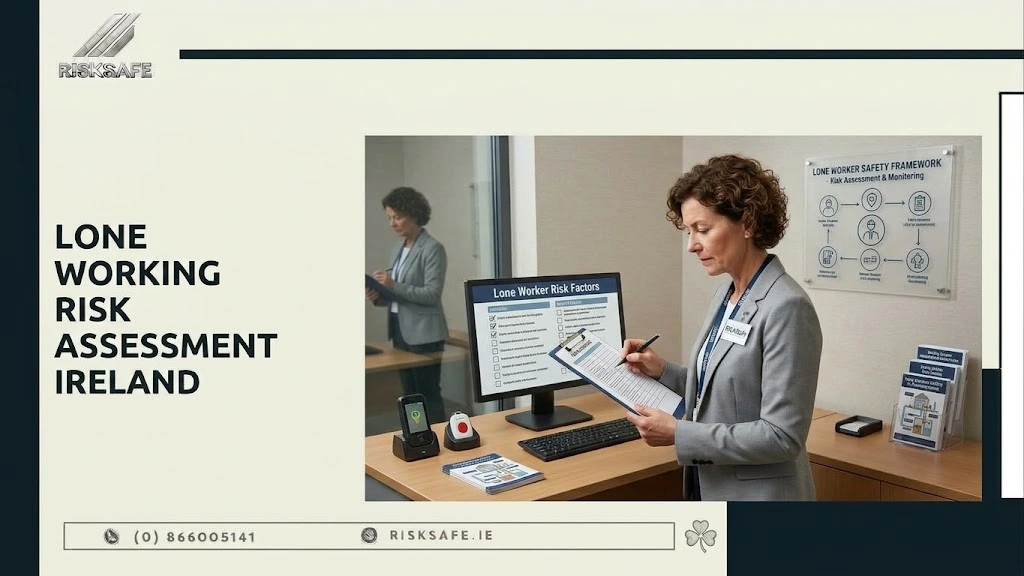
A facilities employee enters an empty building to investigate a fault. The job should take twenty minutes and a colleague knows roughly where they are. Then the employee slips and cannot reach the phone. The danger came from having no immediate assistance.
That is the central issue behind a lone working risk assessment Ireland employers can rely on. Isolation can increase the consequences of an accident, illness, equipment failure, aggression or delay. Controls must address the work and how quickly a problem will be detected.
This guide explains lone worker safety Ireland, what a practical assessment should cover, how to develop a lone working policy Ireland workplaces can use and what an effective emergency response should look like.
Is Lone Working Legal in Ireland?
Yes. The Health and Safety Authority states that there is nothing in general legislation that specifically prohibits a person from working alone. However, Section 19 of the Safety, Health and Welfare at Work Act 2005 requires employers to identify workplace hazards, assess risks and hold a written risk assessment.
The assessment must determine whether an employee would be at significantly higher risk while working alone. Employers must also check whether specific rules apply to their industry or activity, because some work may require particular supervision or arrangements.
If the assessment shows that a task cannot be performed safely by one person, the answer is not another phone or a signature accepting the risk. The employer must provide help, backup or a different system of work. The official HSA guidance for lone workers provides the starting point for making that decision.
Who Counts as a Lone Worker?
A lone worker may have no close supervision or immediate assistance, even inside a larger occupied building.
Examples include:
- A cleaner working before or after normal opening hours.
- A maintenance employee visiting plant rooms or vacant premises.
- A delivery driver or mobile service worker travelling between sites.
- A retail employee opening or closing a premises alone.
- A property manager inspecting an unoccupied building.
- A worker meeting clients or working in an isolated part of a larger site.
The arrangement may be regular, occasional or created by absence. Assess foreseeable situations, not only roles labelled “lone worker”.
Why Lone Working Changes the Risk
Many hazards exist whether a person is alone or accompanied. Isolation may not cause the event, but it can make the outcome more serious.
After a fall, sudden illness or threat, a colleague might raise the alarm or guide responders. A lone worker may wait longer for help.
Important lone-working hazards may include:
- Accidents arising from tools, equipment, vehicles or the work environment.
- Sudden illness or a medical emergency.
- Fire or loss of safe access.
- Violence, aggression, robbery or intrusion.
- Manual handling that cannot be completed safely by one person.
- Hazardous substances or processes requiring assistance or supervision.
- Poor mobile coverage and failed communication equipment.
- Remote travel or difficulty reaching the location.
- Inadequate first-aid, rest, hygiene or welfare facilities.
Effective lone worker safety Ireland arrangements examine how isolation affects likelihood, consequences, communication and rescue—not only the original task hazard.
How to Complete a Lone Working Risk Assessment Ireland
The assessment should follow the work from planning through completion.
1. Describe the Real Activity
Record the task, location, timing, duration, equipment, travel and supervision. Ask employees how the work is actually performed, including delays and variations.
2. Identify Normal and Emergency Hazards
Consider routine hazards and foreseeable illness, fire, equipment failure, violence or lost communication. Include safe access and exit.
3. Decide Whether One Person Is Enough
Decide whether one person can control the risks. Identify tasks requiring a second person and work that must stop when backup is unavailable.
4. Consider the Individual and Competence
Consider experience, training and ability to recognise agreed limits. New employees or unfamiliar work may require accompaniment. Manage health considerations appropriately and confidentially.
5. Select Layered Controls
Do not rely on one measure. A phone only helps when charged, accessible and connected. Combine restrictions, supervision, check-ins, alarms, training and emergency planning.
6. Record, Implement and Review
Document controls, responsibilities and escalation. Confirm they work under real conditions and update the assessment after changes or failures.
RiskSafe’s guide to risk assessment vs Safety Statement explains how a task-specific assessment connects with the organisation’s wider written safety arrangements.
When Should Work Not Be Carried Out Alone?
Some activities cannot be made acceptably safe for one person. Lone work may be prohibited where:
- Essential controls require two people.
- Rescue cannot be achieved within a suitable timeframe.
- Communication is unreliable and the consequences of delay are serious.
- The task is subject to specific supervision requirements.
- Uncontrolled violence or aggression risks remain.
- The employee lacks the required experience or competence.
- Safe access, exit or transport cannot be maintained.
Employees must be able to stop and seek support when conditions fall outside the plan. Operational pressure must not override the assessment.
Controls That Support Lone Worker Safety Ireland
Controls should match the risk, not the convenience of an app or device.
| Control | Questions to answer |
| Check-in system | Who initiates contact, how often and what happens after a missed check? |
| Phone or radio | Is coverage reliable, the device charged and accessible during the task? |
| Personal alarm | Who receives the alert and can they respond quickly enough? |
| Movement or fall alarm | Is it suitable for the work, tested and protected from false-alarm fatigue? |
| Supervisor contact | Is competent advice available when circumstances change? |
| Travel plan | Are the destination, route, expected finish and safe return confirmed? |
| Site security | Are entry, exit, lighting, visitors and aggressive behaviour addressed? |
| First aid | Are facilities, kits and training proportionate to the location and response time? |
Higher-risk work may require live monitoring or a second person; lower-risk work may use planned calls and completion confirmation. Management must decide through assessment.
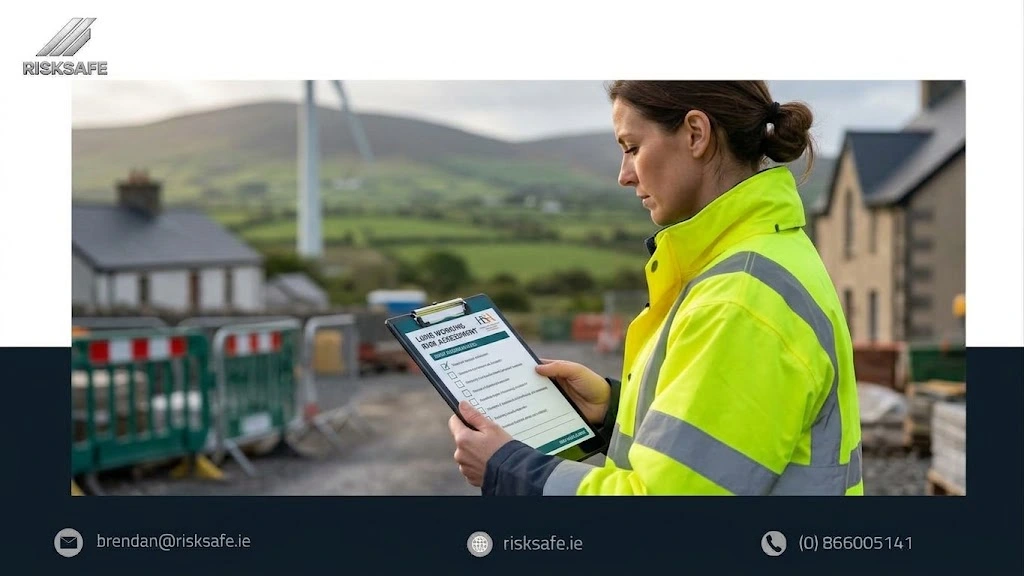
What Should a Lone Working Policy Ireland Include?
A lone working policy Ireland employers implement should turn assessment findings into consistent rules, including:
- The organisation’s definition of lone working.
- Roles covered and activities permitted or prohibited.
- Management, supervisor and employee responsibilities.
- Check-in intervals and approved communication methods.
- Action after missed calls, alarms or overdue completion.
- Violence and aggression precautions where relevant.
- First-aid, welfare and emergency arrangements.
- Training, incident reporting, records and review triggers.
The policy must reflect the organisation’s people, sites, hours, hazards and realistic response capability.
Building a Lone Worker Emergency Procedure
A lone worker emergency procedure must work when information is incomplete and cover more than calling a manager.
Define:
- How the worker raises an alarm or requests help.
- Who receives alerts during every relevant shift.
- How a missed check-in or automatic alarm is verified.
- When escalation begins and who contacts emergency services.
- What location, access and hazard information responders receive.
- Who is permitted to attend and what they must not attempt.
- How the incident is recorded, investigated and reviewed.
The response must be achievable. Someone who does not monitor alerts cannot be an effective contact. Test the lone worker emergency procedure using failed calls, unclear locations and out-of-hours alarms.
Section 11 of the Safety, Health and Welfare at Work Act 2005 requires adequate plans and procedures for emergencies and serious and imminent danger. Lone-working arrangements should connect with those wider plans.
Lone Working Employer Responsibilities
Core lone working employer responsibilities include identifying lone work, assessing risk, implementing controls, providing training, arranging supervision and preparing for emergencies.
These lone working employer responsibilities should be assigned, documented and reviewed.
Employees must cooperate, use equipment correctly and report incidents, but this does not transfer the employer’s primary responsibility.
For work at another organisation’s premises, exchange information about hazards, access, emergency procedures and controls before the visit.
Training, Supervision and Check-In Frequency
Check-in frequency must reflect risk, location and the potential consequences of delayed help.
Training should explain:
- Limits of authorised lone work.
- How to test and use communication or alarm equipment.
- What to do when the task, location or client behaviour changes.
- How to activate the emergency procedure.
- How to report incidents and near misses.
Supervision should reflect risk and experience. New starters may initially require accompaniment. Site visits, scheduled contact and task reviews can provide appropriate oversight.
Incident Reporting and Review
A missed check-in, failed alarm or loss of signal should be reviewed even when nobody is injured.
RiskSafe’s guide to near miss reporting in Ireland explains how useful reports can lead to corrective action rather than blame. Where first-aid coverage is part of the control strategy, the guide to workplace first aid requirements in Ireland provides further context.
Review arrangements after incidents, new locations, staffing or equipment changes, and unreliable communication or response.
Common Lone-Working Mistakes
Common weaknesses include:
- Treating possession of a mobile phone as the complete control.
- Using check-ins without an escalation procedure.
- Allowing employees to decide individually whether backup is required.
- Ignoring travel, access and exit risks.
- Assessing the task but not illness, violence or emergency response.
- Failing to test alarms, coverage and response times.
- Keeping a generic policy that does not reflect actual work.
- Continuing lone work after conditions move outside agreed limits.
RiskSafe’s HSA inspection checklist can help review whether assessments, procedures, training and corrective actions are organised.
How a Health and Safety Audit Can Help
A lone working risk assessment Ireland addresses particular tasks and conditions. An audit examines whether the wider system keeps those arrangements effective.
RiskSafe provides Health and Safety Audits Dublin for businesses and organisations. Depending on the agreed scope, an audit may identify gaps in risk assessments, emergency procedures, training records, incident follow-up or assignment of responsibilities. It does not replace a task-specific assessment, but it can show whether lone-working controls are supported by the wider safety system.
Frequently Asked Questions
-
Is Lone Working Illegal in Ireland?
No. General legislation does not prohibit it, but the employer must assess whether the work can be performed safely by one person and consider any activity-specific rules.
-
Does Every Lone Worker Need a Risk Assessment?
The employer’s written assessments should cover lone-working situations and the particular risks created or increased by isolation. Similar tasks may be grouped only where the circumstances genuinely match.
-
How Often Should Lone Workers Check In?
The interval should be based on risk, task duration, location and potential consequences of delayed assistance. The procedure must state what happens after a missed check.
-
Is a Mobile Phone Enough for Lone Worker Safety Ireland?
Not always. Coverage, battery, accessibility, worker capability and response arrangements matter. Higher-risk tasks may need automatic alarms, closer supervision or a second person.
-
What Should a Lone Working Policy Ireland Contain?
It should define lone working, responsibilities, prohibited tasks, communication, check-ins, escalation, emergency response, training, reporting and review arrangements.
-
When Must an Employee Stop Lone Work?
The written procedure should define limits. Employees should stop and seek advice when conditions change, controls fail or the task moves beyond their training or authorisation.
Make Sure Help Is More Than a Phone Call Away
An effective lone working risk assessment Ireland does not try to remove every uncertainty. It identifies foreseeable problems, prevents unsuitable work from being done alone and creates a response that still functions when the worker cannot explain what has happened.
RiskSafe helps Dublin organisations review workplace procedures, documentation and the effectiveness of existing controls. Contact RiskSafe to discuss your workplace and request a tailored health and safety audit quotation.